Zoning, Highest and Best Use, and Commercial Land Appraisers in Brantford, Ontario
Commercial value in Brantford begins and ends with what the land is legally allowed to do. Zoning speaks first, market opportunity speaks second, and the appraiser’s job is to interpret both with evidence, not wishful thinking. If you are looking at a warehouse near Garden Avenue, a small infill site off Colborne Street, or a mixed commercial property along King George Road, the valuation hinges on the same question: what is the highest and best use, given Brantford’s planning framework, physical constraints, and current demand?
As someone who has worked on commercial building appraisal in Brantford and across Southwestern Ontario, I have learned to read the city’s planning context like a contour map. The slopes are not always obvious from the road. Brantford sits at the confluence of steady industrial demand, a maturing retail corridor, and a municipal planning regime shaped by the Provincial Policy Statement, conservation authority regulation along the Grand River, and a major boundary adjustment that brought new employment lands into the city. You cannot price a site or a building here without weighing those forces carefully.
Why zoning is the first gatekeeper of value
Zoning is not a backdrop. It is the operating system that either enables or blocks revenue. The City of Brantford’s zoning by-law regulates permitted uses, building envelopes, height, setbacks, parking, landscaping, and often, loading and outside storage. Two parcels that look similar from the street can carry very different latitude for income-producing uses. One may allow a drive-through and automotive service, the other may prohibit them. Those details can move value by hundreds of thousands of dollars.
Brantford also carries a patchwork of site-specific exceptions, legacy zones, and transitional areas that reflect how the city has grown. Parts of the east end sit near Grand River Conservation Authority regulated lands, where floodplain policies limit intensification. Along Highway 403 interchanges at Garden Avenue, Wayne Gretzky Parkway, and King George Road, corridor commercial zoning often brings access management rules, traffic studies, and queuing requirements that affect site layout. Within older industrial parks like Braneida, permitted uses are typically broad, but outdoor storage, heavy manufacturing, or waste-related activities may be restricted or require additional approvals.
For investors who assume they can always rezone, the local reality can be sobering. Yes, rezonings and minor variances are granted regularly, but they are not guaranteed, and the timing is material to valuation. Even a modest change of use in Brantford can take three to six months for a minor variance and six to twelve months or longer for a rezoning. Layer in site plan approval, studies for traffic or noise, and you are often spanning multiple construction seasons. Value hinges on whether you can achieve the cash flow you are underwriting within a reasonable window, given permit risk and carrying costs.
The boundary adjustment and what it changed
In 2017, a boundary adjustment transferred a large swath of land from Brant County into the City of Brantford. For appraisers, the practical impact has been a deeper pipeline of employment lands and greenfield opportunities with varying levels of servicing readiness. Some tracts near the 403 are attractive on paper but require staged infrastructure or environmental work. Servicing status matters. A 10-acre site with water and sanitary services at the lot line commands a different value than a similar site two years from servicing and tied to a development agreement or frontage improvements.
I have seen buyers miss this. A client once brought me a contract for an industrial parcel near the Northwest Business Park priced as if it were ready for a 60,000 square foot tilt-up. It was not. The zoning supported light industrial, but stormwater and a road extension were still in the early design stage. The carrying cost and delay alone clipped the as-is value by a wide margin, and the lender needed the as-is appraised value, not a pro forma promise. The deal got repriced, everyone recalibrated, and the buyer still closed. If we had relied on a quick comparable without verifying servicing and approvals, the valuation would have been wrong.
The four tests of highest and best use, applied locally
Appraisers across Canada rely on the same backbone for highest and best use, consistent with the Appraisal Institute of Canada’s standards: legal permissibility, physical possibility, financial feasibility, and maximum productivity. In Brantford, the first and second tests do most of the heavy lifting because of zoning and environmental overlays, but the third test, feasibility, has shifted rapidly since interest rates moved and cap rates widened.
- Legal permissibility. Confirm the current zoning, any site-specific exceptions, and whether the use is permitted as-of-right or needs a variance or rezoning. Check the Official Plan designation as well. If the OP guides the site to a future employment area, a commercial plaza may face an uphill path, even if a nearby property operates that way under legacy permissions.
- Physical possibility. Study frontage, depth, topography, access, queuing, truck maneuvering, and utilities. In flood-prone areas near the Grand River or its tributaries, the GRCA’s regulated area can constrain building footprints or limit basements. Narrow urban parcels along Colborne or Dalhousie may support only select layouts that meet parking and loading standards without expensive easements.
- Financial feasibility. Test rents, vacancy, and expenses based on current evidence. Cap rates for small-bay industrial in Southwestern Ontario have generally moved up 100 to 200 basis points since 2022, and construction costs rose faster than many pro formas assumed. A project that penciled at 5 percent may need 6.5 to 7 percent to sell today. The spread between development yield and exit cap rate needs to be credible, or you are not in feasible territory.
- Maximum productivity. Among all legally and physically possible, feasible options, which one produces the highest land value or residual? In fill-in corridors, a two-storey office with ground-floor service retail might outproduce a single-tenant drive-through if stacking and access require over-engineered site works. In interior industrial parks, a clear-height warehouse with simple loading and minimal office typically outruns specialized uses that limit the future buyer pool.
When an appraiser evaluates commercial land or an improved property, we do not just recite these tests. We tie them to evidence, municipal process, and timing. A highest and best use that requires a rezoning with transportation and noise studies and potential opposition from adjacent residential may still be the winner, but the risk-adjusted path to get there factors into the as-is value. For lenders, that difference is critical.
Vacant land versus improved property: different questions, different answers
For vacant land in Brantford, the direct comparison approach tends to lead, supported by residual land techniques if a credible development program exists. Comparable sales must be parsed for servicing, timing of approvals, and whether they traded with conditions like cost-sharing or credits. I prefer to bracket the subject with at least three land sales within the past 12 to 24 months in Brantford or adjacent markets such as Brant County, Paris, or the east end of Hamilton, then apply specific adjustments rather than a one-size-fits-all factor. A parcel that sold at a sharp price because it was pad-ready with a drive-through permit is not a clean comp for a raw corner two years from site plan approval.
For improved properties, the income approach often carries the most weight, but I do not ignore the cost and direct comparison approaches. On a small retail plaza along King George Road, you want in-place rents, lease terms, recoveries, capital expenditure history, and tenant rollover risk. If half the tenants sit below market by 25 percent and roll in the next 18 months, the stabilized value may be higher than the as-is, but only if you account for downtime and leasing costs honestly. For an industrial building near Wayne Gretzky Parkway with clear heights in the 24 to 28 foot range, the market pays up for functional loading, ample power, and fenced yard, but it discounts obsolete mezzanines and insufficient truck courts. The income approach captures this nuance if the https://www.instagram.com/realexappraisal/ rent inputs respect the difference between asking and achieved rates.
The cost approach finds its footing with special-purpose assets and newer builds where depreciation is still limited. In Brantford, I have used it to cross-check values for newer single-tenant buildings with specialized tenant improvements, especially when comparable sales are thin. You need recent construction cost data, developer pro formas, and local experience with site works. Soil conditions near the river valley can add surcharges that generic cost manuals do not always reflect.
Official Plan direction, site plan control, and what that means for timing
Brantford’s Official Plan sets the citywide policy lens. If a property sits within a designated intensification corridor, mixed-use commercial with residential above might receive policy support, but parking ratios, angular planes, and transition to low-rise neighbourhoods can constrain the buildable area. Most commercial projects will go through site plan control, which brings engineering reviews, elevations, landscaping, and urban design. Timelines vary with submission quality. A tidy package can see first comments in four to six weeks, but multiple resubmissions are common.
Rezoning adds public consultation and statutory timelines. If traffic or environmental studies are required, tack on consultants’ lead times and seasonal windows for field work. Where the Grand River Conservation Authority has jurisdiction, permits can add months. These realities belong in a realistic absorption and cash flow schedule. When I model a phased project on a larger employment parcel, I use ranges for approval durations, not single-point estimates. Lenders prefer conservative schedules informed by recent local files, not generic municipal timelines.
Environmental overlays and the river’s quiet veto power
The Grand River is as much a financial factor as a scenic one. GRCA regulated areas can limit grading, restrict basements, or require raised finished floor elevations. Properties near watercourses may trigger natural heritage studies and setbacks that nibble away at net developable area. For an appraiser, these carve-outs change both density and site coverage, and they often shift the highest and best use toward less intensive forms than the zoning might imply. A commercially zoned site with a deep rear yard constrained by a floodplain might work well for a drive-through bank where stacking can be oriented away from the constraint, while a grocery with heavy parking demand may not fit without variances and fill placement that are unlikely to pass.
I once valued a small commercial parcel that hugged a tributary ravine. On paper, the zoning permitted a two-storey mixed commercial building. After walking the site with the owner and a civil engineer, it was clear that stormwater management would consume a larger-than-typical corner of the lot, and an existing culvert near the frontage limited access points. The realistic envelope could carry a single-storey building with a right-in, right-out driveway. The highest and best use shifted to a lower density, and so did the value. The owner still sold, but aligned expectations saved a lot of friction.
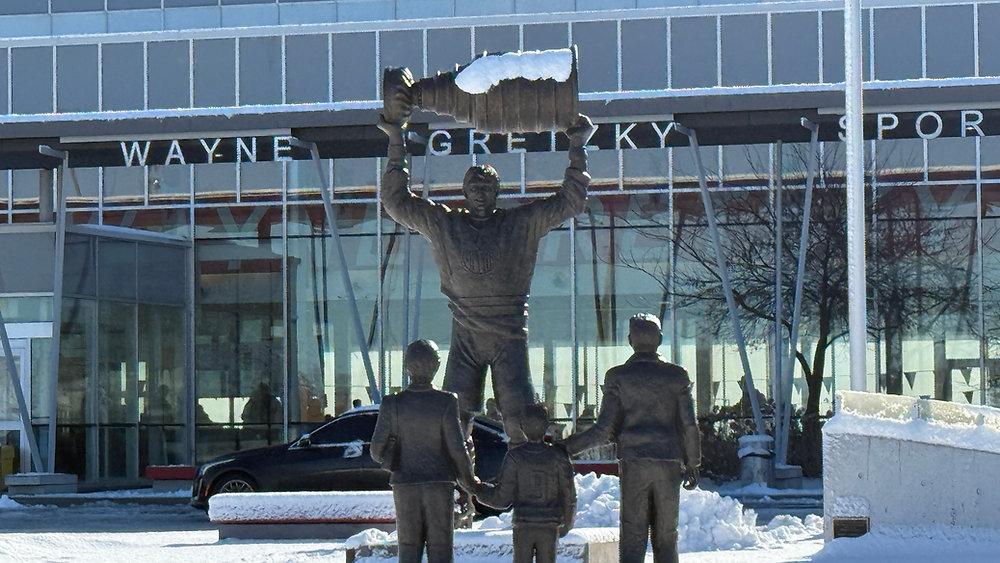
Market shifts, cap rates, and the wideness of today’s ranges
Over the last few years, cap rates in Southwestern Ontario drifted up from pandemic lows. The direction is clear, even if exact numbers vary by asset class and tenant quality. Smaller retail plazas with service tenants and short lease terms often trade in the mid to high single digits. Single-tenant net lease assets with investment-grade covenants compress lower but push out if the lease term is thin. Industrial with modern specs commands stronger pricing, but secondary locations or older buildings without dock loading see a discount. More important than arguing over 25 basis points is recognizing that debt costs, lender stress tests, and rent growth assumptions must align with what Brantford can actually deliver.
Rents have risen in many segments, particularly small-bay industrial where regional demand outstrips supply, but not enough to erase the entire impact of higher borrowing costs. Retail rents are tenant and site specific. A clean end cap on King George Road with a drive-through and exposure can secure a premium. Interior bays on older plazas without visibility or signage rights do not. Office remains a thin market outside medical and government users. Appraisers and investors should resist importing GTA assumptions wholesale. Brantford is its own market, connected to Hamilton and Cambridge, but behaving on its own terms.
Legal non-conforming uses and the temptation to overreach
Older commercial properties sometimes operate uses that current zoning would not permit in a new build. If they have legal non-conforming status, that right can continue. The tricky part arrives when an owner wants to intensify, expand, or add a second similar use. Minor variances may cover small deviations, but a rebuild after a fire or a significant addition can trigger full compliance. For valuation, it means you cannot underwrite the future as if the past is guaranteed. I have seen analyses that ascribe value to a theoretical second drive-through on a site where stacking and access already tested municipal patience. That is not value, that is hope.
Practical examples on the ground
Consider three common Brantford scenarios.
A corner pad near a 403 interchange. Everyone wants the drive-through. Access management and queuing standards take first priority. If the right-in, right-out restriction blocks safe stacking, you may be trading the drive-through for a bank, medical clinic, or QSR without drive-through. Land value swings with that determination. Good appraisers will check the traffic engineer’s pre-consultation notes before opining.
A mid-block industrial parcel in Braneida. The buyer plans 28 foot clear, ESFR sprinklers, and two docks per 10,000 square feet. Check the zoning for outside storage limits, the width for truck courts, and the utility capacity. If the site cannot turn 53 foot trailers without encroaching on setbacks, the building loses functionality. Better to know this before you model rents that assume first-tier specs.
A tired strip on an arterial with deep setbacks. The owner hopes for a mixed-use redevelopment. The Official Plan may smile on intensification, but angular plane rules near adjacent low-rise homes, parking ratios, and access may drop the achievable density. Often, a staged plan yields the most value: refresh the existing centre, secure one new pad at the frontage, then market a long-term redevelopment that will need assembly. The appraised value can recognize that sequencing when there is evidence that the steps are realistic.
How commercial building appraisers in Brantford assess improved assets
For commercial building appraisal in Brantford, Ontario, the analysis starts with leases, condition, and location, but moves quickly into zoning, site functionality, and tenant quality. Commercial building appraisers in Brantford, Ontario collect rent rolls, copies of leases and amendments, expense histories, capital plans, and any recent environmental or building reports. They reconcile direct capitalization with a discounted cash flow where lease rollovers or capital programs warrant a staged projection. For single-tenant assets, they pay close attention to term remaining, options, assignment rights, and landlord obligations for structural repairs.
A common pitfall is conflating asking rents with achieved rents. On several recent files, asking rates lagged actual deals by 1 to 3 dollars per square foot in either direction depending on unit size and condition. The best way around this is to verify signed deals within the past three to six months, not just broker flyers. In Brantford’s compact market, it is usually possible to triangulate a defensible range when you call enough sources and check registry records for sale-leasebacks or new transactions.
What separates a strong commercial land appraisal in Brantford from a generic one
Good commercial land appraisers in Brantford, Ontario do three things consistently. They verify permissions with city planning and the GRCA when needed, including any active pre-consultation files. They adjust land sales for servicing status, not just size and location. And they account for timing in a way that lenders can model: clear as-is value, separated from any as-if rezoned scenario with explicit assumptions and documented probabilities.
When I am hired by a lender, I often produce both an as-is and an as-if report section, with sensitivity tables that shift rents, cap rates, and construction costs in realistic bands. The point is not to gild the pro forma. It is to show how a feasible project stays feasible when something slips, because something almost always does.
Working with appraisers and the city: a short playbook
- Gather early. Provide surveys, environmental reports, servicing letters, leases, and any pre-consultation notes before the site visit. Surprises waste time and money.
- Verify the rules. Ask planning staff to confirm permitted uses, parking ratios, and any site-specific exceptions. If there is a past Committee of Adjustment file, pull it.
- Walk the site. Measure truck turning radii, look for hydro poles, check grade changes. Photos and drawings are helpful but never replace a site walk.
- Model time. Identify which approvals are needed and build a realistic schedule with consultant lead times. Treat time as a cost item in your analysis.
- Keep comps honest. Ask brokers for achieved rents and recent sale details. Adjust for conditions and concessions. Thin markets reward careful verification.
A note on assessments and their limits
Commercial property assessment in Brantford, Ontario is set by MPAC, not the city, and feeds into property taxes. Assessment values are not market value opinions for lending or sale. They are mass appraisal estimates based on a valuation date and class-based modeling. I sometimes use assessment data to benchmark building areas or as a directional check on relative value between properties, but I do not substitute it for a fresh market analysis. When a client waves an assessment notice as proof of market value, I explain the context, then show how current cap rates and rent rolls translate into an actual price buyers are paying today.
Choosing among commercial appraisal companies in Brantford
There are several commercial appraisal companies in Brantford, Ontario and the surrounding region. When choosing, look for Accreditation with the Appraisal Institute of Canada, local land use fluency, and recent assignments in the asset class you are buying, selling, or financing. If you have an industrial deal, ask for two or three industrial references. If it is a mixed-use redevelopment, make sure the firm is comfortable with both land residual methods and income models for the existing improvements. A well-documented scope, transparent assumptions, and timely communication matter more than the logo on the cover page.
Fees and timelines vary. For a straightforward commercial building appraisal in Brantford, Ontario, a one to three week turnaround is common once documents are in hand. Complex land files with multiple scenarios take longer. Respect the process and you will get more than a number on a page. You will get a grounded narrative you can take to a lender, a partner, or a municipal meeting without flinching.
Edge cases worth attention
Corner sites with split zoning. These can unlock creative layouts, but they can also trap you in two sets of rules. The higher intensity zone does not automatically override the lower one on the same parcel. Treat each portion according to its designation or apply for a consolidation through rezoning.
Legacy easements and access. Older plazas sometimes rely on handshake agreements with neighbours for shared driveways. Without registered easements, legal access can be shakier than it appears. Title searches and conversations with adjacent owners matter.
Parking ratios in evolving corridors. As Brantford experiments with more urban forms along key arterials, parking minimums may change, or reductions may be negotiable with transportation studies. Until those policies formalize, underwrite to current requirements or secure approvals before assuming relief.
Broker pro formas that assume free-flowing access. Intersections along King George Road and Wayne Gretzky Parkway have specific turn restrictions. A left turn across three lanes at peak hour is not a reliable assumption. If access is difficult, tenant mix skews to destination users, and rents reflect that.
Industrial conversions with office-heavy buildouts. A building marketed as flex may be 50 percent office buildout that few industrial tenants want to inherit. Demolition and retrofit costs belong in your underwriting. The appraisal should model market rent for the use the market wants, not the one the building happens to contain today.
The lens for the next five years
Brantford will keep feeling pressure from the GTA and the Hamilton corridor. Industrial demand should remain solid, though cost of capital will govern how much new product actually delivers. Retail will continue to segment between experiential and service users that benefit from traffic, and commodity retail that competes online. Mixed-use will surface where planning supports it, but only pencils where construction costs and achievable rents meet in the middle. Through all of this, zoning will stay in the foreground, and the highest and best use question will not go away.
For owners and investors, the advantage goes to those who incorporate planning, approvals, and physical constraints into their valuation early, not as an afterthought. For commercial land appraisers in Brantford, Ontario, the craft is part detective work, part market translation, and part risk pricing. When it is done well, it does not just answer what a property is worth. It explains why, under what conditions, and how that value can move if the facts change.
If you approach your next project with that posture, you will find that Brantford rewards clear thinking. The city is large enough to offer variety and depth, yet small enough that details still travel by phone call and site walk. That is a good mix for disciplined investors and for appraisers who believe the work should stand up to scrutiny long after the ink dries.