Zoning and Its Impact on Commercial Land Appraisal in Wellington County
A vacant 1.2 acre corner in Fergus sat on the market for months at a number that felt rich. The parcel was designated for mixed commercial in the Official Plan but carried a holding symbol tied to a traffic study and a sanitary capacity allocation. Once those items were cleared, the buyer lifted the H, secured a drive-through as a permitted use by site-specific amendment, and signed a pre-lease with a national tenant. The land did not move an inch, yet its value climbed by hundreds of thousands of dollars. That margin came almost entirely from zoning.
Commercial land appraisal is, at its core, the measurement of what a site can lawfully and feasibly become. In Wellington County, the lawful piece is woven through the County Official Plan, local zoning by-laws, conservation authority constraints, and the web of permits that flow from them. Appraisers use that fabric to judge highest and best use, then translate use potential into numbers. Small wording in a by-law can shift yield by 20 percent, tip a deal from retail to service industrial, or lock a site into long-term holding. Anyone commissioning a commercial building appraisal in Wellington County needs that zoning context front and center.
How zoning controls shape value
Appraisers start with a four-part test for highest and best use: legally permissible, physically possible, financially feasible, and maximally productive. Zoning sits first in line. If the by-law does not allow a warehouse, there is no warehouse cash flow to underwrite. If it allows a warehouse by special exception and the municipality has approved similar exceptions on adjacent parcels, the legal hurdle shrinks, the permitted envelope widens, and value follows.
The term legally permissible sounds dry, but in practice it is dynamic. It includes:
- Uses permitted as of right in the zone.
- Uses permitted by minor variance, temporary use by-law, or site-specific zoning amendment.
- Constraints and overlays, such as holding symbols, Source Water Protection zones, and conservation regulated areas.
- Process milestones, fees, and timing risk, which discount value back to today.
Experienced commercial land appraisers in Wellington County look past the zone label on a listing. They parse the definitions section of the by-law to see if a “restaurant” includes a drive-through, whether a “retail store” excludes cannabis, or if “warehouse” requires an accessory showroom. They check if the by-law caps any single retail tenant at a certain floor area in the Central Business District to protect main street character. They confirm parking ratios, stacking lane requirements for drive-throughs, and access restrictions along County roads.
The difference between a permitted drive-through in a Highway Commercial zone in Arthur versus a holding-zone corner in Erin that needs a queuing study and an access permit can be the difference between land worth 1.1 million per acre and land worth 650,000 per acre, even if the dirt, frontage, and traffic counts look similar. Appraisers quantify that difference.
Wellington County’s planning structure in practice
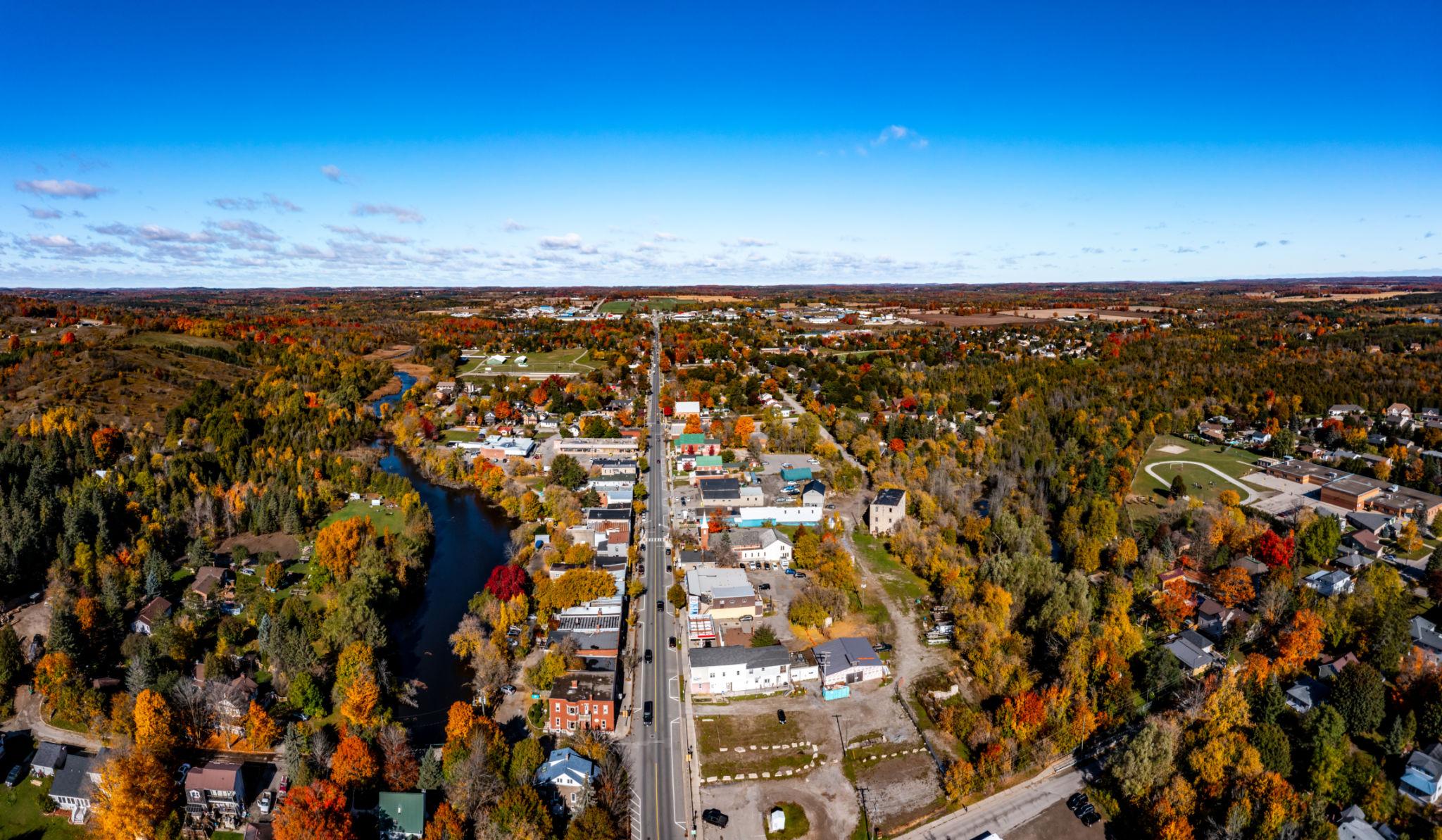
The County’s Official Plan sets the big map, including Urban Centres like Fergus, Elora-Salem, Erin, Harriston, Palmerston, Drayton, Arthur, and Mount Forest, plus Hamlet and Rural designations. It outlines commercial nodes, employment areas, and agricultural policies. Local municipalities set the zoning by-laws: Centre Wellington, Erin, Wellington North, Guelph/Eramosa, Puslinch, Mapleton, and Minto each maintain their own. These by-laws do not mirror each other. A Service Commercial zone in one township can permit auto sales and contractor yards; the same label in another may prohibit outdoor storage.
Most commercial sites also sit within one of three conservation authorities: Grand River, Saugeen Valley, or Maitland Valley. If regulated, grading, fill, or development often requires permits, which cut into development yield or add cost. Parts of the County overlay Source Water Protection zones, which can restrict certain heavy commercial uses like dry cleaning plants or fuel handling near municipal wells. On rural highways, the Ministry of Transportation can control site access within a set distance of the right-of-way, another legal constraint that tightens or delays.
Holding symbols are common on newly designated parcels. The by-law typically pins the H to conditions such as available sanitary capacity, extension of a road, or completion of a stormwater management block. Appraisers will read the holding provisions, call planning staff to confirm status of servicing allocations, and adjust value based on the likelihood and timing of lifting that H. A two year wait with uncertain costs produces a very different present value than a three month procedural lift with executed agreements.
Zoning variables that move the needle
The most consistent drivers across the County show up as line items in zoning texts. If you skim the following group with an appraiser’s eye, you can see the math inside each:
- Permitted use menu and definitions. Whether the zone permits grocery, drive-through, medical clinic, contractor yard, indoor self-storage, or light manufacturing determines tenant pool and achievable rents. The definitions section often sets conditions that expand or narrow what a common term covers.
- Intensity controls. Maximum lot coverage, floor area ratios, height caps, and open space requirements dictate buildable gross floor area. A 40 percent lot coverage with single storey height caps makes a shallow yield compared with a zone that allows two storeys and 60 percent coverage.
- Site geometry rules. Front, side, and rear setbacks, daylighting triangles, and corner visibility setbacks erode net buildable area. On small village lots, a one meter difference in setback can kill a functional loading bay or reduce the number of parking stalls below by-law minimums.
- Parking and loading. Ratios for retail, medical, restaurant, and industrial, plus requirements for barrier-free stalls and loading spaces, frequently govern building footprint more than coverage caps. Relaxed standards in a downtown core can unlock second storeys; suburban standards can force single-storey pads.
- Overlays and constraints. Source water zones, floodplain and hazard lands, conservation setbacks, noise buffers along rail lines, and holding symbols either prevent uses or add time and cost. Each overlay becomes a line in the pro forma and a discount in the risk line.
Every item above clips or boosts net rentable area, compresses or widens tenant demand, and shifts risk. Appraisers translate these into residual land values and land comps, then reconcile.
Urban versus rural: two markets under one county label
Wellington County presents two distinct commercial markets.
Within Urban Centres like Fergus and Elora, parcels are often fully serviced, zoned for retail or mixed commercial, and assemble into plazas or main street retail. Parking ratios in central business districts are sometimes reduced, particularly for upper floors, which can support office or residential above shops. Intensification policies and streetscape guidelines influence massing and tenancy. Rents for national quick service restaurants and pharmacies can support ground lease models or high land residuals, even on small 0.6 to 1.0 acre pads. Appraisers working on a commercial building appraisal in Wellington County’s urban cores use income evidence from comparable leases, matched carefully by use type and zoning permissions. A drive-through coffee tenant paying 70 to 90 per square foot net on a small pad is not a comp for a medical office at 28 per square foot in the same block.
In rural townships, commercial often means highway commercial pockets at intersections or service industrial along township roads, with private wells and septic. Zoning can allow fuel, farm supply, contractor yards, and equipment sales, but impose site plan control and access spacing rules. Septic sizing becomes a constraint on restaurant uses. Parking needs dominate. Rents are lower, tenant rosters are local or regional, and exposure to agricultural policy is real. Minimum Distance Separation formulas can limit where new livestock facilities locate, which in turn protects or pressures rural commercial nodes depending on adjacency. For land valuation, appraisers lean more on sales comparison and land residuals calibrated to realistic rural rent levels, cost of private services, and longer lease-up expectations.
Sales comparison, income, and the zoning filter
Valuation for commercial land and buildings ties closely to the zoning filter.
For income-producing buildings, the income approach weighs most heavily. Market rents, vacancy, expenses, and capitalization rates all reflect what the by-law allows. If the zone forbids medical clinics, you cannot populate your rent roll with them. If the zone caps restaurant floor area or mandates higher parking, achievable gross leasable area and rent profile shrink. Commercial building appraisers in Wellington County regularly adjust rent comps by use type and by-law flexibility, not just by location. Two plazas a kilometer apart can have different effective cap rates because one accommodates drive-through and the other does not.
For raw or lightly improved commercial land, the sales comparison approach typically leads, but with a strict comparable selection narrowed by zoning and overlays. An ostensibly similar parcel across the county line in Guelph is often a poor comp if its zone permits higher densities or carries a downtown parking exemption. Within the County, a site with an active holding symbol in a new expansion area will trade at a discount to an in-service corner with access secured and site plan endorsed. The discount often ranges from 10 to 35 percent depending on the complexity of the hold and service costs. The land residual method becomes useful where credible pro formas exist, for example when a developer has a letter of intent from a pharmacy and a fast-food pad. Appraisers residualize by backing out hard and soft costs and required returns to solve for land value, then test the result against zoned land sales.
Where a rezoning is probable, appraisers may value two scenarios: as is under current zoning and as if rezoned with an estimated probability weighting. If, for instance, a warehouse use in a Service Commercial zone has been refused historically along a certain corridor, the probability weight for a rezoning might be low. If council has approved three similar site-specific amendments on the same street in the past two years, the probability weight might rise to 60 to 80 percent. The discount for time, fees, and appeal risk lands on the spreadsheet as an adjustment to present value.
Process and timing risk under Ontario’s changing rules
Ontario has modified planning timelines and decision authorities several times in recent years. For Wellington County municipalities, this shows up in stricter statutory decision deadlines for site plan and zoning applications, changes to what is subject to site plan control, and new or evolving development charge bylaws. Appraisers do not need to memorize every bill number. They do need to translate application timing and fee structures into risk and cost.
A site-specific zoning amendment in Centre Wellington might take 6 to 10 months if uncontroversial. Add a conservation permit and a traffic impact study tied to a County road access, and the window can open to 12 to 18 months. If an appeal to the Ontario Land Tribunal looms because the proposal draws policy objections, the uncertainty extends and the discount deepens. Commercial appraisal companies in Wellington County will often interview planning staff, review council minutes on similar files, and scan OLT decisions to gauge outcomes.
Development charges apply differently across municipalities and land uses. For a 12,000 square foot retail plaza, the DCs can add several hundred thousand dollars. For a small rural contractor yard with limited water usage, DCs may be lower or inapplicable, but private servicing costs rise. Community Benefits Charges generally do not apply to small commercial projects, but appraisers confirm with the municipality. Each dollar in fees moves the residual, so each deserves a fact check.
Three vignettes from the field
A Fergus pad with a drive-through. A 0.9 acre corner, Highway Commercial zone, drive-through permitted as of right, 35 percent coverage, 30 percent landscape, and 6.0 spaces per 100 square meters parking. A national coffee chain signs a 20 year net lease at 85 per square foot on a 2,200 square foot building with a ground lease structure. Land sales suggest 1.3 to 1.5 million per acre for fully permitted drive-through corners with access secured. The appraiser reconciles near the top of that range, given corner prominence, queueing accommodated on site, and recent County approvals for similar layouts.
An Erin village mixed-use lot. A 0.5 acre https://cashtioe086.image-perth.org/choosing-the-right-commercial-property-appraisal-in-wellington-county-a-complete-guide parcel in the core, Central Business District zone, two storeys allowed, reduced parking standards for upper floors. Ground floor retail rents average 28 to 32 per square foot net, upper floor office 18 to 22. Parking constraints limit ground floor depth. The appraiser’s income approach favors a two-storey 8,000 square foot building, with eight surface spaces and shared parking agreements. Zoning’s parking relief for cores enables the second storey, lifting residual land value by roughly 20 percent over a single-storey scenario.
A rural highway contractor yard in Puslinch. A 3.5 acre site, zoned for service commercial with outdoor storage permitted but screened, well and septic, MTO permit required for upgraded access. The site sits partly within a Source Water Protection vulnerable area, which prohibits certain fuel storage configurations. A buyer seeks to relocate a growing landscape supply operation. Zoning supports it, but the access permit and source water mitigation add cost and six months. Sales of comparable rural yards adjusted for servicing and access constraints point to 350,000 to 425,000 per acre. The appraiser lands mid-range after quantifying the cost and time to satisfy conditions.
Picking comparables with care
The temptation with land is to widen the search radius until the numbers look tidy. That move can trap you. In Wellington County, a three acre highway site in Mount Forest that prohibits drive-throughs and limits outdoor storage is not a true comp for a Palmerston site that welcomes both. Downtown Fergus main street parcels with heritage overlays and zero-lot-line massing differ from edge-of-town sites with sea-of-parking formats. The best commercial land appraisers in Wellington County document why each comparable is in, how each differs in zoning and constraints, and where adjustments come from. They will also note when a sale price reflects extraordinary terms, such as pre-leasing in place, a vendor take-back mortgage, or a closing conditioned on lifting a hold.
The same care applies to improved property. A medical-oriented plaza with relaxed parking standards near a hospital node tells a different story than a highway strip where restaurants dominate and parking ratios run high. Cap rates will float accordingly. Commercial property assessment in Wellington County often hinges on teasing out these differences to support exchanges with lenders and, when needed, to provide a defensible opinion in assessment appeals.
What changes in a rezoning
Not all rezonings are born equal. A change from Highway Commercial to a site-specific Highway Commercial that adds drive-through is incremental. A change from Rural to Service Commercial along a county road without services is a heavier lift. Appraisers look at:
- Policy alignment. Does the Official Plan encourage the use in the area, or is an Official Plan Amendment required?
- Precedent. Have similar rezonings been approved nearby within the last five years?
- Technical hurdles. Traffic impacts on a County road, water and wastewater limits, environmental constraints, and access permits from MTO.
- Public interest. Compatibility with adjacent uses, noise, light, and odour considerations, especially in villages and hamlets.
- Timing and fees. Staff capacity, consultant workload, and development charge implications.
Even if the landowner believes a rezoning is inevitable, lenders and buyers tend to price the time and risk. A weighted scenario analysis helps reconcile value where rezoning probability is high but not certain. Appraisers write that reasoning down, with references to staff reports and past council decisions, because that is what end users and reviewers expect.
A short due diligence checklist for buyers and lenders
- Read the zone text and definitions, not just the map label, and confirm whether the desired use is as-of-right or requires an exception.
- Call planning staff to confirm status of any holding symbols, servicing allocations, or known studies tied to the parcel.
- Check conservation authority mapping and Source Water Protection layers, and ask for written guidance on regulated activities.
- Confirm access permits and spacing along County or provincial roads, and whether shared access agreements are feasible.
- Verify development charges, parkland or cash-in-lieu requirements, and any site plan control triggers for the intended development size.
These steps take hours, not weeks, and they prevent most valuation surprises. Commercial appraisal companies in Wellington County do them as a matter of course, and sophisticated buyers demand the same discipline before money goes hard.
Building value through small zoning moves
Some of the best returns in small-market commercial come from modest entitlements. A minor variance to reduce parking by two stalls can unlock a second tenant bay worth 30,000 per year. A site plan tweak to relocate a loading space can allow an extra 800 square feet of retail depth, which pushes the rent line and the residual. On village main streets, clarifying that upper-floor residential is permitted in the zone can generate predictable value by filling small units at steady rents, backstopping a conservative retail forecast.
Legal non-conforming rights matter too. A long-established auto service in a core zone where new auto-related uses are prohibited might carry valuable grandfathered use rights. Appraisers will verify the date and continuity of the use. A buyer who assumes they can intensify that use may be wrong; a buyer who understands the protective value of the existing right can negotiate price with precision.
The role of seasoned local appraisers
The technical process is universal. The local nuance is not. Commercial building appraisers in Wellington County build files on how each township interprets certain uses, which engineering consultants move applications efficiently, and where conservation authorities draw firm lines. They track lease rates tenant by tenant, not just by broad category, and test whether a by-law’s permitted use list matches that tenant universe. They stay alert to County road projects that will add turn lanes and medians, because those can affect access and, by extension, value.
If you are vetting commercial appraisal companies in Wellington County, ask for examples where zoning changed the valuation conclusion. A competent firm will recall three within the last quarter and explain how they priced time and risk. If you are instructing a commercial building appraisal in Wellington County for financing, provide any correspondence with planning authorities, site plans, or traffic work. That material shortens research time and sharpens the opinion. If your need is for a land purchase decision, ask the appraiser to outline value under current zoning, under probable minor entitlements, and under a stretch scenario that assumes a tougher amendment. The three numbers map your decision space.
Edge cases worth a second look
Self-storage in light industrial or service commercial zones is a recurring gray area. Some by-laws still do not list self-storage explicitly, and definitions of warehouse and storage differ. A careful reading and a quick pre-consultation with planning avoid surprises. Cannabis retail, once a zoning headache, is now governed mainly by provincial siting rules, but some municipalities have nuanced interpretations on separation from sensitive uses. Medical clinics and allied health uses sometimes trigger higher parking requirements than general office, which can change feasibility on tighter lots.
At the rural edge of towns, the shift from on-site septic to municipal services during expansion can flip value. Parcels outside the current servicing boundary but inside an expansion area can trade on speculation. Appraisers study servicing master plans, timing of works, and council budgets to place a reasonable window on when service will arrive and then apply an appropriate discount. The difference between a three year and a seven year wait is not just time value. Markets can change. Tenants may come and go. When timing spans a full leasing cycle, the risk premium grows.
Another quiet driver is sign control. Where by-laws limit ground sign height and digital signs, national tenants price the exposure loss into rent offers. A future digital pylon along a county highway can pull a national fuel brand that otherwise passes. If the zone prohibits it, or the corridor has a sign by-law that restricts brightness and movement, tenant mix shifts. The change is subtle, but appraisers who read the sign section of the by-law and ask tenants what they need often catch value the rest of the market misses.
Bringing it together
Zoning is not a footnote in commercial appraisal. It is the frame. In Wellington County, the frame varies by township, corridor, and even block. The best commercial land appraisers in Wellington County learn that landscape parcel by parcel and convert permission and probability into rent, cost, time, and risk. For owners and lenders, that translation is where decisions get clear. A tidy frontage and a busy road count mean less than a clause in a by-law that unlocks a drive-through or closes the door on a restaurant. A holding symbol with a short list of lift conditions is closer to money than a designation that demands a new trunk sewer and a traffic signal not yet funded.
If you need a commercial building appraisal in Wellington County, show your appraiser the zoning map, but also the text and any site plans or studies you have in hand. Ask them to articulate how zoning limitations and opportunities are priced in their conclusion. If your file involves a potential rezoning, expect two or three scenarios with probability weights and a clear description of timing and fees. When the opinion reads like that, zoning ceases to be a headache and becomes the clearest path to the right number.