Technology’s Role in Commercial Property Appraisal Brant County Today
Brant County sits at an interesting crossroads. Industrial land along the Highway 403 corridor is tight, older main street commercial blocks in Paris and St. George are being reimagined, and farm parcels have begun hosting agri-industrial uses that blur neat categories. This mix rewards an appraiser who can combine judgment with better tools. Technology, used well, does not replace the work of a seasoned commercial appraiser in Brant County. It makes us faster at routine tasks and sharper when the market gets quirky.
A local market where details matter
You can feel the pull from Hamilton, Cambridge, and the western GTA in lease sheets and sales registries. Tenants who once would not have looked beyond Burlington are signing five year terms in Brantford. That pressure flows through to land values along Garden Avenue and Oak Park Road, then through to older industrial buildings along Henry Street that suddenly make sense to retrofit rather than replace.
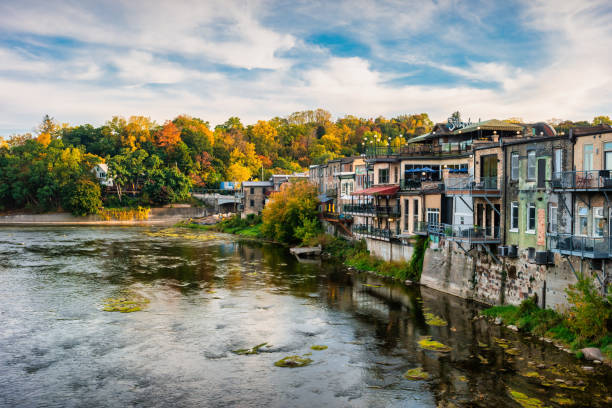
At the same time, the fabric of smaller towns imposes its own rules. A 7,000 square foot retail box on Grand River Street North does not behave like a similar box on a regional arterial in Kitchener. Walk-by footfall, seasonal tourism tied to the river, heritage façades that restrict signage, all of it matters. The county also has conservation overlays and floodplain considerations near the Grand and Nith Rivers, which can change the highest and best use analysis in subtle ways. Add in construction cost volatility and you have an appraisal environment where stale data and generic models fall down quickly.
This is where technology can help. Not hype for its own sake, but disciplined, verifiable tools that speed up the grunt work and open a clearer view of risk.
Data foundations: reliable sources, careful cleaning
Good analysis starts with clean data. For commercial real estate appraisal in Brant County that often means stitching together multiple sources:
- MPAC and land registry records through platforms like Teranet or GeoWarehouse give legal descriptions, sales history, and assessment parameters. You do not accept the default assessment as value, but you learn a lot from the data trail.
- Municipal planning portals house zoning maps, bylaw text, and occasionally minor variance histories. A zoning map download, georeferenced into a GIS layer, saves site visits to confirm permitted uses when time is tight.
- Third party market databases such as CoStar or Altus Data Studio help fill in lease comps and cap rates, though coverage in secondary markets can be thin. The gaps are real, especially for owner-occupied industrial or specialized ag uses, so each entry gets a credibility score in the workfile.
- Energy and building performance disclosures are limited in Ontario for smaller assets, but utility data provided by owners helps triangulate building systems efficiency, which feeds into expense normalization.
Raw feeds arrive messy. Unit sizes disagree across sources. Sale dates and closing conditions get mixed. We normalize fields, check against GIS parcel boundaries, and flag outliers for manual verification. That work is dull but crucial. A mislabeled mezzanine as leasable GLA will overstate stabilized NOI by 3 to 7 percent on many light industrial assets. Technology helps here in two ways. First, scripts that reconcile fields and detect conflicts. Second, interactive dashboards that let you see the distribution of lease rates or vacancy assumptions at a glance. You catch errors faster when the shape of your data looks wrong.
Fieldwork is still a craft, with better instruments
You learn a building by walking it, listening to the HVAC grind on start-up, counting loading docks, and following the roofline with your eyes. Technology does not change that ritual. It adds precision where your senses run out.
Modern laser measurers paired with a mobile sketching app reduce square footage disputes. I have watched a 1960s industrial split with two later additions come in at three different areas depending on which drawing you grabbed. A fresh interior perimeter loop with point-to-point capture and live validation on a tablet lets you publish an ANSI-compliant sketch the same day. On larger sites, a drone run can document roof condition and site circulation in 20 minutes, especially helpful when snow lingers on north faces. You still check with a roofer if a seam looks suspect, but the map reveals where to send them.
Photos matter more than people admit. A structured capture workflow, with viewpoint prompts for each space type, prevents gaps. There is a world of difference between forty unlabelled photos on a phone and a geotagged, time-stamped set organized by floor and room type. The former ends up as a memory test. The latter becomes a reliable record, indispensable if a file resurfaces two years later because of an appeal or litigation.
During the early pandemic pivot to remote inspections, we used guided video walkthroughs and client-supplied imagery as a stopgap. For smaller tenanted retail with repeating bays, it worked acceptably. For complex industrial with mezzanines and craneways, it led to misses. That lesson stuck. Remote tools belong in the kit, but they have limits on complex assets.
GIS, maps, and the geography of value
Geography drives much of the story in Brant County. A heat map of industrial sales per acre across Brantford shows a distinct gradient near 403 interchanges. If you run a proximity analysis for heavy truck routes, you can quantify that gradient rather than rely on hunches. That moves the conversation with a lender from opinions to numbers.
GIS also clarifies risk. Overlay floodplain layers from the Grand River Conservation Authority with parcel boundaries, then pull in historical imagery slides. You may find that a rear lot addition rests inside a regulated area, which can limit expansion potential. On rural holdings, soil maps and tile drainage layers can explain the yield that underwrites an agri-industrial mortgage. None of this replaces zoning research, but it shrinks the chance of an unpleasant surprise during underwriting.
For retail in Paris, a simple network analysis that maps five minute walking sheds from major parking hubs, trail access points, and tourist nodes reveals footfall potential bay by bay. When two adjacent storefronts show a stubborn rent gap, these maps often explain why.
Modeling that earns its keep
Commercial appraisal services in Brant County stand or fall on the quality of their income analysis. Technology supports that work without turning it into a black box.
Lease abstraction tools speed the extraction of options, escalation clauses, and recovery structures from long PDFs, but we still read the original paper. Recovery clauses in older industrial forms can vary just enough to make CAM caps or management fee recoveries uncertain. The tool highlights, it does not decide.
For stabilized multi-tenant industrial, a clean pro forma with clearly stated downtime, tenant improvement, and leasing commission assumptions matters more than fancy math. Sensitivity tables do more than impress a lender. They surface weakness. A quick scenario set that shows value impact at 25, 50, and 100 basis point cap rate movement, plus a vacancy shock from 3 to 7 percent, lets everyone see how thin or fat the margin of safety is.
Discounted cash flow models help in two cases that Brant County sees often. First, build-to-suit industrial where rent steps or free rent periods distort a simple direct cap. Second, smaller retail with lease roll clustered in years three to four where the owner plans a refresh and re-tenant. If the tenant market is shifting, you want to model an absorption path rather than assume instant stabilization. Software matters less than discipline. I have built credible DCFs in ARGUS and in a well-structured spreadsheet. What matters is transparent inputs, audit trails, and copy that matches the math in the report narrative.
The cost approach still earns respect on special purpose properties. Local examples include food processing with washdown areas, indoor recreation conversions, and certain farm support uses like seed cleaning. Construction cost guides, adjusted for Southern Ontario factors, get you in the zone, but recent invoices and contractor quotes trump generic figures. A database of verified local steel and concrete bids from the last 12 to 18 months keeps you honest. When steel fluctuated wildly, we started tagging each cost line with a date and source. Later file reviews were easier, and clients appreciated seeing how we bridged from national guides to something that felt real in Brant County.
Comps in a thin market, and how tech widens the lens
Comparable sales and rents can be scarce once you slice by size, age, and use. You do not need to pretend a Woodstock or Simcoe sale is irrelevant just because it falls outside the county line. Technology helps widen the search while enforcing discipline.
A smart comp search starts with a geographic radius, then limits by interchange access, labour pool similarity, and municipal tax load. A tagging system in the workfile classifies each comp by attributes that drive value in our market - clear height, truck doors per 10,000 square feet, office percentage, and power service. A visualization of how Brant County subjects sit against these comps clarifies adjustments. You can defend a location or utility adjustment with more than a sentence.
On retail, we track asking rent drift against executed deals in micro subareas. In Paris, executed rents for the best façade exposures on Grand River Street regularly outpace nearby side streets by a measurable margin even if both present 1,200 square foot bays. That delta is visible when you map executed rents and layer foot traffic data from mobile device aggregators. The data is imperfect, and privacy rules demand aggregation. Still, a consistent reading over many months helps triangulate a fair market rent conclusion.
When using out-of-market comps, we annotate travel time to the 403, median household income in the primary trade area, and retail inventory stock to sanity check a rate. The technology here is a mix of public stats APIs and small scripts that pull values into the comp sheet. The benefit is not automation for its own sake, but a cleaner, faster way to ensure comparability before the adjustment grid does its work.
Risk, compliance, and the Canadian standards that guide us
Technology has to live under standards. In Canada, CUSPAP sets the ground rules for scope, ethics, and reporting, and PIPEDA frames how we handle personal information. When a lender orders a commercial property appraisal in Brant County, they expect more than sharp analysis. They expect a file that would stand up in a review.
Digital workfiles help. Every assumption, source, and photo sits behind the report with timestamps. If a number changes, the versioning shows what happened and why. E-signatures save time, but they only work if identity and document integrity measures are solid. We use platforms with clear audit trails and restrict access to sensitive rent rolls and bank statements to need-to-know team members. It slows sharing slightly. It keeps everyone out of trouble.
Environmental data deserves its own note. A Phase I ESA sits outside the appraisal scope, but references to historical use and nearby risk sites matter for highest and best use and marketability. Access to environmental databases with spill records and former industrial uses, paired with aerial photo archives, lets you flag a concern early. Highlight the risk and recommend specialist review rather than gloss past it.
How technology changes client communication
Commercial appraisers in Brant County wear translator hats more often than not. A developer wants to know whether to proceed, a lender wants security for a loan, an owner wants a fair read on value for estate planning. Technology helps you tell the story cleanly.
Interactive maps and a few well-chosen charts communicate better than dense tables. A rent roll charted by expiry year, shaded by renewal options, conveys rollover risk in a heartbeat. A map of lease comps with symbols scaled by rate helps a reader see outliers immediately. These visuals live in appendices and in the body where they move the argument forward.
Turn times have improved, but only with clear scopes. If the request covers a multi-building industrial park with unusual power service, an appraiser who promises a three day turnaround is guessing. Technology can compress tasks that lend themselves to repeatable steps - mapping, comp searches, template pro formas. Judgment-heavy steps still take what they take. The point is to use tools so the analysis time ends up where it matters rather than on clerical chores.
Asset-specific notes from the field
Industrial across the Brantford market has been the headline for good reason. Renewal rents in plain vanilla bays under 20,000 square feet often drifted up 10 to 20 percent on roll in the past few years, with larger jumps where ceiling heights and truck courts supported modern logistics. Automated rent roll trend analysis flags those renewal cliffs early. It also prevents overreach. A tenant with specialized fit-out and limited alternatives will pay to stay. A generic tenant with options down the highway will not. A data-backed renewal forecast stops magical thinking.
For downtown retail in Paris, façade quality, frontage width, and adjacency to restaurants matter more than square footage efficiency. We annotate pedestrian counts and seasonal variation, especially summer weekends. Mobile-sourced foot traffic data has noise, but cross-checked against merchant POS comments it gives a reasonable index. The better use of technology here is restraint. Do not submit a dense analysis when the story is that two blocks draw tourists and one block does not.
Farther out, agri-industrial and rural commercial uses challenge standard categories. A seed processing facility looks industrial on paper, but its customer base and workflow resemble agriculture. Cost data, utility service, and site circulation drive value more than cap rates pulled from city contexts. Drone flyovers and site diagrams show the choreography of trucks and loaders and explain how a site either works or chokes. The technology-enabled visuals make that case much faster than paragraphs alone.
Automation and its limits
Automated valuation models look enticing when the calendar is full and the inbox keeps dinging. In residential settings they perform tolerably across large datasets with homogeneous stock. In commercial work around Brant County, heterogeneity kills them. Even where you can train a model on square footage, age, site size, and location, the features that truly drive value sit inside leases, loading configurations, and zoning specifics. We use simple regression tools to sanity check trends, not to decide value.
Natural language search has made it easier to find relevant comps and clauses, but it can hallucinate relevance. We built internal guardrails. Any comp surfaced by a fuzzy search must be verified against the original record. Any lease clause summary must link to the scanned page. The discipline saves red faces later.
What clients can do to help the process
Technology cuts cycle times, but it works best when the source material arrives clean. Owners and brokers who prepare a short package up front save days and sharpen the end product. A practical checklist helps:
- The full, executed leases and all amendments, plus a current rent roll with start dates, expiry, options, and recoveries.
- The last two years of operating statements, with a simple mapping to standardized expense categories if internal chart accounts are unique.
- Site plans, floor plans, and any recent building reports, especially roofs and mechanicals, even if informal.
- A summary of capital projects over the last three years and any planned near-term work with budget ranges.
- For properties in regulated areas, any correspondence with conservation authorities or planning departments regarding variances or permits.
With these in hand, a commercial appraiser in Brant County can focus on analysis rather than detective work.
Pricing, scope, and the shape of a good engagement
Not all assignments need the same firepower. A retrospective value for tax appeal on a small retail condo calls for a different approach than a going concern analysis of a special purpose plant. Technology helps us scope accordingly. If drone mapping would not change the analysis, we leave it out and pass the savings on. If a DCF would only restate a simple direct cap result, we keep the model lightweight and invest time in rent validation.
Turnaround for standard multi-tenant industrial in good order runs 7 to 12 business days from full document receipt in our practice. Complex assets or partial inspections extend that. Fees vary with complexity, not only with size. A 10,000 square foot specialized lab can demand more hours than a 60,000 square foot simple warehouse. Commercial appraisal services in Brant County thrive on setting this scope openly at the start. Technology speeds delivery, but clarity keeps it professional.
A brief case from the 403 corridor
A few months back, a lender asked for a commercial real estate appraisal in Brant County on a three building light industrial complex near Oak Park Road. Occupancy sat at 96 percent. Rents looked under market. The owner had resurfaced the yard and replaced two RTUs.
We ran a measured interior and verified GLA with a mobile sketch app, finding a 1,200 square foot overcount the owner had inherited. Drone photos revealed ponding near a roof drain that a contractor later fixed for a modest sum. GIS mapping confirmed no encroachment into regulated areas, but we did note a nearby rail spur that increased truck traffic at certain hours.
Lease abstractions showed two tenants with co-terminus expiries in year two. Sensitivity testing made clear that a back-to-back renewal at market could lift value by a measurable amount, but backfill downtime would hurt just as easily if both vacated. We mapped lease comps along the corridor and in Woodstock, tagged by clear height and office buildout. Adjusted, they supported a blended market rent 12 to 15 percent above in-place. Our pro forma forecasted a staggered renewal strategy with modest TI allowances, which mirrored the local tenant profile. The lender read a clear story, not just a number, and pushed through credit with the sensitivity appendix flagged. The tools did not replace judgment. They made it visible.
Ethics of speed
There is a temptation to let technology push speed above substance. The market rewards quick turnarounds, and software sellers promise miracles. The discipline is to let the machines do the repetitive work while we slow down at the forks in the road. A quick pass can tell you a cap rate band. Only a deeper read will uncover that a triple net lease with a CAM cap actually leaves the landlord covering rising insurance costs above a threshold. That detail changes stabilized NOI and therefore value. The calendar pressure is real. The risk of shallow work is real too.
Where the tools are going next
Three areas look promising without asking for leaps of faith.
First, better integration of zoning and permitting data into GIS viewers. If the County and the City of Brantford continue improving open data portals, appraisers will spend less time reconciling maps and more time analyzing feasible uses. Second, richer cost databases tied to local bids. Even a small regional exchange of anonymized contractor quotes would improve the cost approach on special use properties. Third, standardized, privacy-safe sharing of rent roll data among willing landlords. Markets like ours suffer from thinness. Carefully governed data co-ops can lift the quality of every valuation underwritten against assets in Brant County.
Some are already in motion. Others will depend on trust among market players. https://dallasjkpq745.cavandoragh.org/top-factors-that-influence-commercial-building-appraisal-in-brant-county Commercial property appraisers in Brant County can help by explaining how better data leads to better lending decisions and fewer surprises.
The quiet advantage for local clients
Hire any competent out-of-town firm and you will get a report with acceptable math. The advantage of working with a commercial appraiser in Brant County who uses the right technology shows up when oddities surface. A floodplain kink behind a warehouse bay, a heritage guideline that trims signage options on a prime retail corner, a tenant mix that looks solid until you map rollover. These are local wrinkles. Tech makes the patterns easier to see. Local experience tells you which patterns matter.
For owners, developers, and lenders, that blend of tools and judgment is the edge. It keeps deals moving, reveals risks early, and anchors decisions in evidence. That is the role technology should play in commercial property appraisal Brant County today - a quiet, well-run engine behind a professional who knows the terrain.