Sale-Leaseback Valuation Strategies in Perth County Commercial Property Assessments
Sale-leasebacks look simple at first glance. An owner sells a property and immediately leases it back, turning bricks and mortar into cash while keeping operational control. On the valuation desk, they are anything but simple. The price is usually anchored to a negotiated lease that may or may not align with open market terms. Credit quality, market depth for the asset type, and the tax environment all carry extra weight. In Perth County, where industrial, agri-food processing, and service commercial assets dominate, those details matter to both investors and assessors.
This article traces how experienced appraisers in the region separate real estate value from financial engineering, and how to defend numbers in front of lenders, investors, and taxing authorities. It is written with the rhythm of actual files handled by commercial building appraisers in Perth County, not theory pulled from a classroom.
Why sale-leasebacks complicate value
Traditional investment sales rely on market rents and widely observed cap rates. A sale-leaseback often trades on a bespoke lease, crafted to meet the vendor’s balance sheet or tax needs. The rent may be higher than peers to boost sale proceeds or lower to help the vendor’s future cash flow. Either way, the observable price includes more than real estate. It mixes in a slice of corporate finance and, at times, intangible value tied to the seller’s brand, operating synergies, or specialized fit-out.
That blend challenges a commercial property assessment in Perth County for two reasons. Assessors and courts expect market value of the real property interest, not investment value to a specific tenant. And lenders in Stratford, St. Marys, Listowel, and the rural townships are rightly conservative. They need a durable income stream underpinned by competitive rent and an asset that can be re-let if the tenant falters.
Market context in Perth County
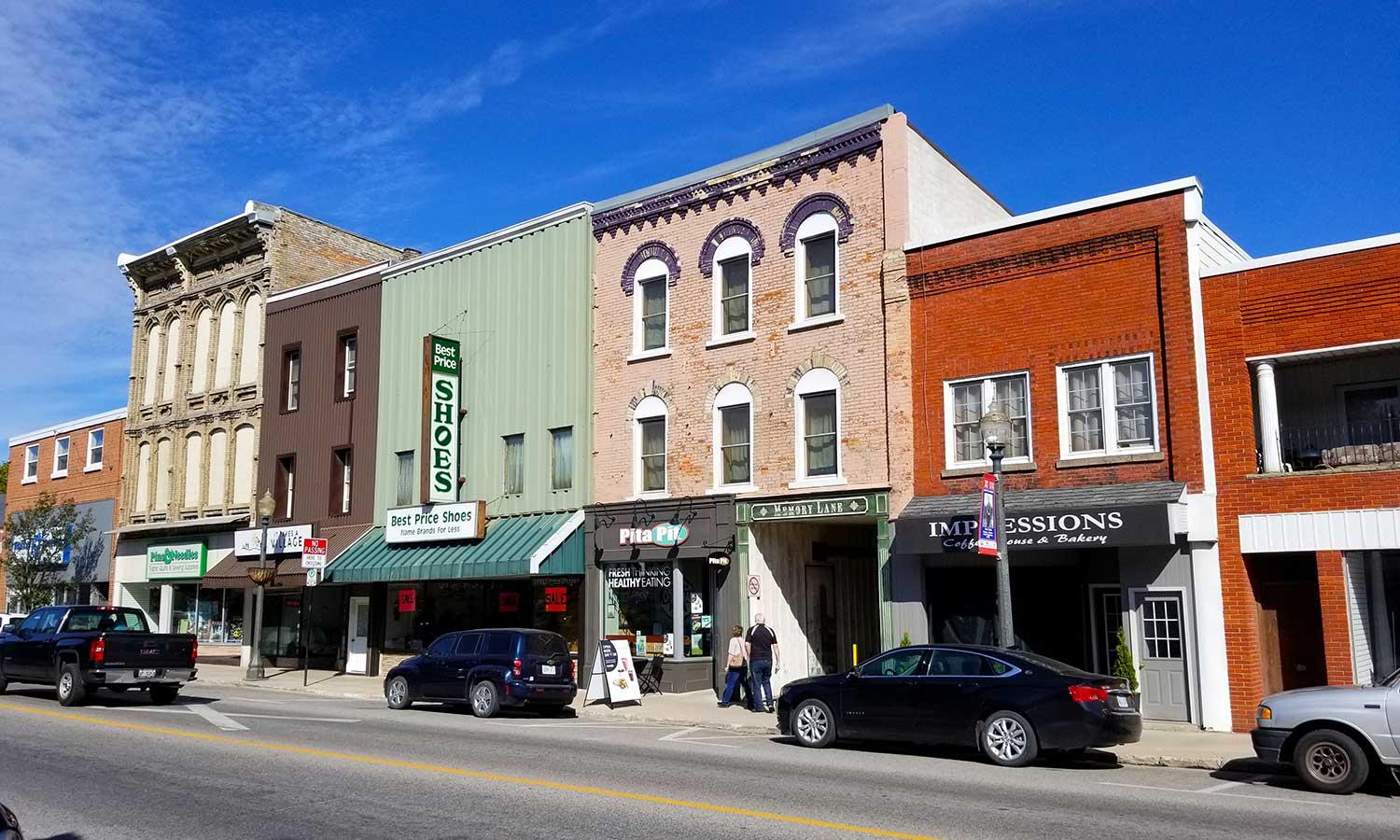
Perth County sits inside a practical drive-shed of Kitchener-Waterloo, London, and the rest of Southwestern Ontario. Logistics routes along Highway 7 and 8, strong agricultural supply chains, and a diversified light industrial base shape the market. Typical industrial buildings range from 10,000 to 100,000 square feet, with modern facilities pulling north of 22 feet clear, ESFR sprinklers where heavy storage is involved, and dock-high loading in the larger bays. Retail is largely service oriented, with downtown main streets in Stratford and St. Marys supported by tourism and local spend, and suburban nodes with daily needs retailers. Office is thinner, most of it small medical or professional spaces.
Vacancy for basic industrial stock has often hovered in a low single digit range in recent years, though older facilities without loading flexibility or with low clear heights can linger. Cap rates for stabilized industrial assets in Perth County generally sit a notch above Kitchener-Waterloo and Guelph, but tightly under smaller rural communities. Typical stabilized cap rates for mainstream industrial might land in the mid 6s to low 7s, with strong covenants and newer builds pressing lower. Retail varies far more by tenant lineup, location, and building age. The point is not a headline rate, but how sale-leaseback terms can push the implied yield away from what peers support.
The property interest you are valuing
Every sale-leaseback prompts the same threshold question: what interest is at stake? Appraisers distinguish between:
- Fee simple interest, as if unencumbered by a lease and available at market rent.
- Leased fee interest, the landlord’s interest subject to an existing lease.
A sale-leaseback transaction price captures the leased fee, but a commercial building appraisal in Perth County may be commissioned for mortgage financing, financial reporting, acquisition due diligence, or even for MPAC discussions around assessment. Each user may require both the leased fee value and a fee simple benchmark. The latter tells you whether the contractual rent is in or out of market, and by how much. That gap drives many of the adjustments that follow.
The three approaches, one engine
All three classical approaches still apply. In practice, the income approach does the heavy lifting. The sales comparison approach informs cap rate and rent reasonableness. The cost approach supports new or special-purpose assets where land value and replacement cost bracket outcomes.
- Income approach. Build two cash flows. The first, a straight look at the lease as written: contractual rent, recoveries, non-recoverables, vacancy on expiry, and a reversion if the lease is short. The second, a fee simple shadow cash flow using market rent and typical terms for similar assets in Stratford and surrounding townships. The spread between them tells you whether you have above market rent that needs to be capitalized and potentially discounted, or below market rent that might suppress value to a third party.
- Sales comparison. Anchor rent and cap rate assumptions with Perth County and nearby Southwestern Ontario deals, adjusting for age, size, clear height, loading, and tenant covenant. Do not overweight sale-leaseback comparables unless you normalize their rents and yields back to market. Otherwise, you are stacking one engineered lease against another.
- Cost approach. Critical when the building is newer, unusually designed for agri-food processing or cold storage, or where limited leases exist. Land value in towns like Mitchell or Listowel can be bracketed using recent serviced industrial lot sales. Replacement cost new less depreciation can test for overvaluation if the income approach, driven by above market rents, runs hot.
Getting rent right when the tenant is also the seller
Rent in a sale-leaseback is often set by desired proceeds. A vendor targeting a 7.00 percent cap may backwards-engineer rent to hit a price. That rent could sit 5 to 20 percent above comparable market deals, or it could slot below market if the seller values long term occupancy cost certainty more than cash on day one.
When commercial appraisal companies in Perth County test rent, they break it down to what can be re-let in the open market if the tenant vacates. This means checking:
- Base rent against achieved rents in nearby towns for similar size ranges and building utility.
- Who carries capital items. True triple net leases push roof, structure, and parking to the landlord at end of life, no matter how the lease is worded. If the rent is high because the landlord will own a near-new roof and slabs for the next tenant, some of that value sits in residual life and needs to be reflected in reserves rather than rent.
- Escalation structure. Fixed steps at 2 to 3 percent annually have been common in inflationary years. If the lease holds flat for five years, make sure the starting rent is not compensating for that freeze.
- Options to renew and fair market value resets. Below market options can cap your reversionary upside. Above market fixed options can deter a new buyer.
For a 60,000 square foot light industrial building in Stratford with 24 feet clear and four docks, suppose open market rent is 11 to 12 dollars per square foot net. If the sale-leaseback is set at 14.50 dollars, you have a 20 to 30 percent premium. That premium might be justifiable if the tenant is investment grade and the term runs 15 years with solid escalations, but you should not impute that premium into perpetuity.
Lease structuring that moves the needle
A few clauses consistently shape value more than others.
Term length and rollover risk. Ten years is a common target. Longer terms can trade tighter, especially with a national covenant. Very long terms above 15 years need scrutiny. If the lease stands far above market, the tail risk at expiry is real. You may need to model a step down to market at the first break.
Net versus gross recoveries. In Perth County, industrial leases usually run net, with tenants carrying utilities, snow, and lawn, while landlords carry structural reserves. Retail CAM caps can shift risk back to the landlord. Whenever an expense is capped, underwrite the landlord shortfall and reflect it in non-recoverables.
Percentage rent or sales-based provisions in retail. Stratford’s seasonal tourism can prop up summer sales but leave winter soft. If percentage rent lifts total rent above market for only a few months, build variability into your stabilized income and do not capitalize a seasonal spike at the same yield as base rent.
Residual use. A purpose-built processing plant with steam lines, trench drains, and specialty power can be expensive to repurpose. If the seller’s use is highly specific, higher https://franciscoelaq151.lucialpiazzale.com/choosing-the-right-commercial-appraiser-in-perth-county-a-complete-guide rent in a sale-leaseback might compensate for re-letting risk. Price that risk explicitly.
The role of tenant credit
Banks and investors underwrite the tenant as much as the box. In a sale-leaseback, they need the credit to carry above market rent if that is the case. Commercial building appraisers in Perth County gather audited financials where possible, or at least management-prepared statements, and test coverage ratios.
Simple tests help. If the tenant’s EBITDA margin sits at 8 percent and the rent consumes 6 percent of revenue post deal, that margin could be squeezed in a downturn. If a national retailer’s bond curves and CDS spreads are available, they can inform a credit-based spread to the cap rate. In smaller, private companies, look to bank covenants, industry cyclicality, and the presence of personal or cross-company guarantees.
Credit informs cap rate, not rent. Do not accept a higher rent solely because the tenant is strong. Price that strength as a lower cap rate on market rent, then layer in any premium value of the encoded lease if it is transferable to the next buyer.
Separating real estate value from financing value
The cleanest way to untangle a sale-leaseback is to value two things separately.
First, the leased fee value based on the actual cash flow, capitalized or discounted at a yield that reflects tenant credit, term, and asset quality. Second, the fee simple value based on market rent and typical leasing costs.
If the leased fee exceeds the fee simple by a material margin, you have a premium embedded in the lease. Buyers pay for that premium when they accept the above market rent through the term. To keep the real estate value grounded for a commercial property assessment in Perth County, you can capitalize the excess rent over market at an appropriate discount rate for the remaining term, then add that to the fee simple value. This yields a reconciled leased fee value that respects both market realities and the deal’s economics.
As a rule of thumb, above market rent premiums are discounted at a rate above the property’s cap rate, because they are more volatile and expire at or before lease end. If the market cap is 6.75 percent, a 8.0 to 9.0 percent discount on the premium is defendable for a mid-market private tenant, and tighter for an investment grade covenant.
Sales evidence and cap rates in Southwestern Ontario
Reliable cap rate evidence matters. In files across Stratford, St. Marys, and Listowel, a defensible range for stabilized industrial with 18 to 28 foot clear has often set between the mid 6s and low 7s in recent years, adjusting for building age, functional utility, and tenant profile. Retail strips with strong daily needs tenancy might sit similar or slightly higher depending on vacancy risk and tenant diversification. Pure office typically sits higher unless anchored by medical with low obsolescence risk.
When a sale-leaseback trades, compare the implied cap rate on contractual first year NOI to market. If a 14.50 dollar net rent on a 60,000 square foot building supports a 9.2 million dollar price at 6.5 percent, check what the same building at 11.75 dollars and a typical 7.0 percent cap would command. The gap is your early warning that financing value may be masking real estate value.
Land, site specifics, and what they mean for re-letting
Commercial land appraisers in Perth County pay attention to servicing, depth of lot, truck court geometry, and yard space. A generous truck apron with the ability to add docks can rescue an older building at re-lease. Sites south of highway nodes that add five minutes to every truck movement can struggle in thin markets. Access for 53 foot trailers matters even in small towns.
Industrial land pricing varies widely with servicing status. Unserviced parcels may show attractive per acre numbers but require heavy upfront investment. Serviced lots in established parks, even in smaller centres, can command a significant premium that feeds directly into replacement cost. This interplay explains why some older assets with lower clear heights still trade well if the site is prime and the building is flexible.
MPAC and the assessment angle
Assessment across Ontario is administered by MPAC, which relies primarily on mass appraisal models. For specialized properties, MPAC will often review rent and cap data to infer value. With sale-leasebacks, the file can get sticky if the assessment mistakenly rides the engineered rent rather than market rent. A well documented commercial property assessment in Perth County can head this off.
When representing owners, present market rent evidence, vacancy trends, typical non-recoverables, and a supportable cap rate grounded in local trades. Distinguish the lease that came with the sale-leaseback from what the market would pay in an open listing if the tenant vacated. Include fee simple analysis in your submissions. MPAC’s own materials recognize the need to remove non-realty components of value. Provide a clear roadmap to do so.
Lender, investor, and vendor perspectives do not always align
Lenders want durability and easy fallback if the tenant stumbles. They tend to anchor on the lower of leased fee and fee simple cash flows, and they buffer loan sizing for re-letting costs, months of downtime, and tenant inducements. Investors split, with core buyers prioritizing term and credit, and value-add buyers hunting for discounted assets where rent is off market and expiry is near. Vendors in sale-leasebacks often try to pull forward value through rent. The appraiser’s role is to translate these views into a number that can be defended across cycles.
A practical workflow for commercial building appraisal in Perth County
Seasoned commercial appraisal companies in Perth County follow a disciplined path.
Start with a clear brief. Are you opining on market value as is of the leased fee interest, or are you also providing fee simple benchmarks for assessment or financing? Clarify the purpose with the client at the outset.
Inspect for the basics that drive re-let potential. Ceiling clear height, column spacing, truck access, electrical service, loading doors, slab thickness where heavy equipment runs, and any food grade improvements. Note deferred maintenance. Photograph roof condition, parking lots, and dock levelers.
Collect third party perspectives. Leasing brokers in Kitchener-Waterloo and London often place tenants into Perth County and can sanity check rent quotes. Property managers can flag actual non-recoverables that never make it back to the landlord under net leases.
Build two cash flows, not one. Model the current lease and a market rent scenario. Stress test both with reasonable downtime and re-leasing costs at expiry.
Set your cap rate with a bracket. Use at least three strong comparables nearby and a wider ring of Southwestern Ontario trades if local evidence is thin. Adjust for age, utility, and tenant credit. Then reconcile with your own sense of buyer behavior in the current quarter.
Explain, do not hide, the gap between the two values. If the leased fee is materially higher because of above market rent, quantify the premium and discount it separately.
A grounded case example with numbers
Consider a single tenant industrial building in Stratford at 60,000 square feet, 24 feet clear, five docks, and one drive-in. The property is in good condition with modest office buildout. A manufacturer sells the asset and leases it back for 12 years, net, starting rent 14.50 dollars per square foot with 2.0 percent annual bumps. Tenant pays taxes, insurance, and maintenance. Landlord covers roof and structure at end of life.
Local leasing evidence supports 11.50 to 12.25 dollars per square foot net for comparable utility, with 12 month free rent packages rare, more typical 3 to 6 months on a five to seven year deal. Vacancy for similar space is estimated at 3 to 5 percent.
Leased fee cash flow, year one NOI:
- 60,000 sf x 14.50 dollars = 870,000 dollars net rent.
- Non-recoverables, reserves for capital items estimated at 0.35 dollars per square foot, or 21,000 dollars.
- Stabilized NOI: 849,000 dollars.
Market rent cash flow, year one NOI:
- 60,000 sf x 12.00 dollars = 720,000 dollars net rent.
- Similar reserves of 21,000 dollars.
- Stabilized NOI: 699,000 dollars.
Implied rents show a premium of roughly 2.50 dollars per square foot, or 150,000 dollars per year. If market cap rates for this profile run near 6.75 to 7.25 percent depending on covenant, and the tenant is a private mid-market company with steady but not rated credit, we might select 6.75 percent for the leased fee and 7.00 percent for the fee simple.
Leased fee indication at 6.75 percent: 849,000 divided by 0.0675 equals roughly 12.6 million dollars, ignoring reversion assumptions for illustration.
Fee simple indication at 7.00 percent: 699,000 divided by 0.07 equals roughly 9.99 million dollars.
Excess rent stream equals 150,000 per year in year one, growing at 2 percent for 12 years. Discount that stream at, say, 8.5 percent to reflect higher risk than the stabilized NOI. The present value lands in the 1.4 to 1.6 million dollar range depending on precise assumptions. Add that to the fee simple value near 10.0 million, and you reconcile to about 11.4 to 11.6 million dollars for the leased fee. This is materially below the simple 6.75 percent capitalization of the full contractual NOI, and it is defensible. You have recognized the premium, but you have not capitalized it at a core asset yield.
A lender might anchor loan sizing closer to the fee simple figure, or split the difference with conservative stress testing. An investor chasing yield could still pay above the reconciled value if they prize the 12 year term. For a commercial property assessment in Perth County, the fee simple value benchmark carries the most weight with MPAC.
Common pitfalls that sink sale-leaseback valuations
- Capitalizing excess rent at the same cap rate as market rent, which overstates the value of a time limited premium.
- Forgetting non-recoverables that always fall back to the landlord, such as roof replacements, lot resurfacing, and management overhead.
- Treating soft credit like hard credit, compressing cap rates because the tenant is a good operator but lacks deep balance sheet strength.
- Ignoring site functionality, especially truck access and yard space, which govern re-letting speed.
- Over-relying on engineered sale-leaseback comparables without normalizing rent and yield to market.
The appraisal file that stands up under pressure
Most disputes do not come from the number, they come from thin rationale. A tight appraisal file for a sale-leaseback in this region reads like a small research paper with three pillars.
First, articulate the market rent conclusion with local leases and quotes. Include a short narrative of at least five comparables, their size, clear height, loading, and lease terms. Explain why the subject would achieve the selected number if placed on the market with typical exposure.
Second, explain your cap rate with actual sales and a sentence or two on buyer profile. In Perth County, local private buyers fill much of the demand. Institutional capital steps in for larger or newer industrial. The buyer mix affects pricing. Do not hide that judgment.
Third, quantify and discount the rent premium explicitly if it exists. That single step, shown transparently, cuts through most of the confusion between deal price and real estate value.
Where specialized expertise pays for itself
Sale-leasebacks reward appraisers who know both the capital markets language and the quirks of small market real estate. Commercial building appraisers in Perth County earn their keep by spotting where a lease is propping up price rather than reflecting broad market conditions. Commercial land appraisers in Perth County protect investors from sites with hidden functional issues that only appear at re-lease. And a few well established commercial appraisal companies in Perth County keep a running pulse on cap rates and lease terms across Stratford, St. Marys, Listowel, and the surrounding townships.
If you have a file entangled with food grade improvements, low ceiling heights, or a railway spur that only one tenant values, bring that nuance into the valuation. For tax assessment strategy, present both leased fee and fee simple values and guide the reader to the market-based benchmark. For financing, build downside cases that survive credit stress.
A short data checklist before you model
- Exact lease language on recoveries, capital items, options, and termination rights, not just a term sheet.
- Recent local lease comps with clear height, loading, and net effective rent after inducements.
- Tenant financials or at least banker references and covenant details.
- Capital plan for roofs, paving, and building systems, with cost ranges, not guesses.
- Site plan and truck circulation drawings, or at minimum, turning radii measurements on site.
What experience teaches
After enough sale-leaseback files, patterns emerge. The best deals leave both sides slightly unsatisfied. The buyer pays close to what the real estate can support at re-lease, plus a fair present value of the rent premium if any. The seller converts equity to cash at a price that respects market rent fundamentals, not just the spreadsheet target. And the valuation work reads as an honest map from lease terms to market evidence to a number that holds its shape when interest rates move or when a tenant’s fortunes change.
Perth County’s commercial fabric is resilient. Demand for good industrial boxes with practical sites and solid power persists. Retail survives on convenience, services, and, in Stratford’s core, the draw of the Festival and a strong hospitality sector. Appraisers who know these streets and yards can separate story from substance in sale-leasebacks. That is the core skill, and it will keep your values defensible whether you are advising a bank, an investor, or an owner about to sign a lease that will set the next decade of their balance sheet.