Office Space Valuation: Commercial Appraisal Best Practices in Elgin County
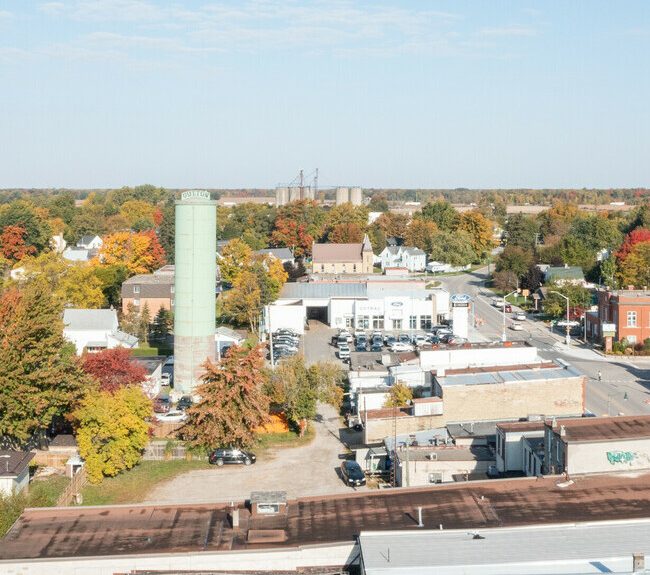
Elgin County’s office stock sits at an interesting crossroads. You have traditional storefronts along Talbot Street in St. Thomas, professional suites over ground floor retail in Aylmer and Port Stanley, stand‑alone medical and dental buildings near hospitals and clinics, and small suburban office condos serving accountants, lawyers, and engineers. Layer in older converted houses that function as professional offices, and you get a market that does not behave like Toronto or London, yet is deeply connected to both. Appraising office space here demands an approach that respects local patterns while using rigorous, defensible methods.
I appraise commercial real estate within and around Elgin County for a living. The best assignments in this area start with curiosity about the particulars: how a dentist negotiated tenant improvements, why a landlord opted for semi‑gross rent on a second floor walk‑up, or how a parking lot across the street changes a vacancy risk profile. Those are not quirks, they are value drivers. When you hire a commercial appraiser in Elgin County, you want someone who sees those details and anchors them to the three classic approaches to value.
Why office value in Elgin County is a little different
Office values hinge on rent, risk, and replacement, but the context matters. Elgin County’s demand does not come primarily from big finance or tech, it comes from stable local services: medical, public administration, education, professional firms, and contractors with small admin teams. That mix keeps absorption steady, but caps breakneck rent growth. Proximity to London and Highway 401 matters, yet many tenants want to be near their clients, not a downtown tower. For assets in St. Thomas, the Volkswagen PowerCo battery plant and supplier ecosystem will influence office demand over the next several years. The lift is not immediate and uniform, but it widens the base of service firms and consultants who need local presence.
This is a market where the nuance of location, condition, and tenant profile can swing value. A second floor suite without an elevator will sit longer than a ground floor medical unit, even if both show similar rentable area. A building with eight on‑site stalls will secure better prospects than one relying on street parking, even with flexible leasing terms. Port Stanley’s tourist pull changes daytime population, which trickles into certain professional uses. If you appraise this county the way you would a downtown Class A tower, you miss how people actually use space and sign leases.
The foundation: three approaches, one conclusion
The backbone of any commercial real estate appraisal in Elgin County remains the income, direct comparison, and cost approaches. The art is not picking a favorite, but reconciling them using market logic.
- Income approach: Typically primary for leased investment properties, or owner‑occupied assets with a clear market for investor resales. It turns stabilized net operating income into value using a capitalization rate or discounted cash flow.
- Direct comparison: Crucial for owner‑occupied office, small office condos, and mixed‑use with limited or atypical leases. It watches what buyers paid for similar buildings and adjusts.
- Cost approach: Most useful for newer buildings with little depreciation, special‑purpose medical improvements, or where land value and replacement cost set a ceiling. Often supportive rather than decisive, but important for sanity checks.
For a small two‑storey office on or near Talbot Street, I usually lead with the income approach, refine with sales comparisons, and look to the cost approach primarily to cool unreasonable expectations when replacement cost outstrips market value.
Income approach, applied to local leases
The income approach demands careful normalization. In Elgin County, you will see a bundle of lease types:
- Net leases with tenants paying taxes, insurance, and utilities, and the landlord covering structural and sometimes common area maintenance.
- Semi‑gross or modified gross arrangements on second floor space where landlords keep property tax and insurance and pass through some cleaning and utilities.
- Full‑service gross leases for medical or government suites where simplicity is valued.
Every lease abstract should document base rent, escalations, additional rent structure, inducements, and free rent. A common pattern is a tenant improvement allowance in the range of 10 to 30 dollars per square foot for general office refreshes, with medical suites going higher due to plumbing and specialized finishes. Free rent of one to three months on a five‑year term is not unusual when a space has been on the market for a while. Translate these concessions into an effective rent stream, not just the face rate. An office unit leasing at 18 net with two months free is closer to 17.40 effective in year one, and if you capitalize on stabilized income you still need to ensure your leasing and downtime assumptions match the market.
Vacancy and credit loss assumptions should reflect micro‑location and quality. Downtown St. Thomas ground floor office with solid visibility might warrant a stabilized vacancy in the 5 to 7 percent range in normal conditions. Upper floor walk‑ups or properties with awkward layouts may justify 8 to 10 percent. Newer medical‑oriented space with ample parking can support tighter rates. Rather than rely on a county‑wide average, align to peer buildings within a 10 to 15 minute drive.
Cap rates for small office in Elgin County generally trade wider than London, but tighter than remote rural markets. For stabilized multi‑tenant assets with decent covenant mixes, I often see investor expectations in the 7 to 8.5 percent range, sometimes as tight as mid‑6s for medical anchored or government‑tenanted space, and up to 9.5 percent for functional obsolescence or heavy vacancy risk. The spread compresses when debt is cheap and widens as financing costs rise. If you cannot support your cap rate with at least three actual trades or broker‑verified indications, you are guessing. Pair local transactions with regional data from London when Elgin evidence is thin, but adjust for liquidity and tenant depth.
Expenses require scrubbing. Property taxes in Ontario can jump between cycles or after renovations, so use a normalized tax load based on current assessment and mill rates rather than historical bills when a reassessment is likely. Insurance runs higher on older knob‑and‑tube electrical or mixed‑use with restaurants below, so set allowances by building profile. Utilities change with HVAC type, envelope quality, and hours of operation. Compare against benchmarks per square foot, but trust bills where they are clean and recent. If an owner self‑manages, layer in a reasonable management fee, typically 3 to 5 percent of effective gross income, because a buyer will either hire management or value their own time.
A discounted cash flow can help when you have staggered lease expiries, step rents, or near‑term capital required. Keep it conservative. Eschew heroic terminal cap rates, disclose re‑tenanting downtime assumptions, and include leasing commissions where appropriate. Lenders appreciate a simple single year cap rate result cross‑checked with a DCF rather than an opaque model.
Direct comparison in a thin market
Sales comparison can feel frustrating when you only have a handful of trades in the last year. It still matters. The job is to match on essentials, then adjust for differences with a light, honest hand. Key comparability factors for Elgin County office include:
- Location within the county: Talbot Street corridor versus peripheral arterial, visibility, and parking.
- Building era and condition: Pre‑war conversions, 1960s to 1980s brick boxes, or post‑2000 steel and glass.
- Floor configuration: Single tenant, multi‑tenant, ground floor presence, elevator or not.
- Parking ratio: Stalls per 1,000 square feet, on‑site versus municipal lots or street.
- Zoning flexibility and potential for mixed use or conversion.
When sales are scarce locally, widen your radius carefully. Pull in small office trades from London’s outer neighborhoods for context, then dial down for liquidity, rent levels, and tenant depth. Use a price per square foot as a reference, but always translate back to what an investor could reasonably earn on the asset. In owner‑occupier situations, the buyer’s utility frequently supports a higher price than income investors would tolerate. Note that openly, rather than trying to squeeze an investor narrative where it does not belong.
Cost approach, used with restraint
For newer office or medical buildings in Central Elgin, a cost approach can be helpful. Marshall Swift and similar cost manuals can give a replacement cost new per square foot, which you then adjust for local factors. Depreciation is where many appraisals stumble. Do not paint a 25 percent physical depreciation number and move on. Break it down. Identify short‑lived components that need replacement within five years, like rooftop units or windows. Recognize external obsolescence where surrounding uses cap achievable rents, even if the building is pristine. Land value should come from recent commercial land sales adjusted for site prep, not a back‑solved residual.
The cost approach becomes persuasive when it aligns with the market. If your replacement cost, less depreciation, yields a value significantly above income support, it is telling you the building is over‑improved for its location. https://dallasinbx713.capitaljays.com/posts/the-role-of-commercial-building-appraisers-elgin-county-in-financing-and-refinancing That is a message owners do not love, but banks appreciate.
Reading the leases, not just the rent roll
An Elgin County rent roll can mask risk. Small tenancies with personal guarantees, two‑page leases, and month‑to‑month arrangements are common in older buildings. That is not automatically bad, but it is volatile. Contrast that with a five‑year net lease to a medical practitioner, with assignment provisions and solid security. The face rent might be similar, yet the income quality is night and day.
Note inducements clearly. If a landlord paid 60 dollars per square foot in dental buildout, that tenant is sticky and the landlord’s cash flow absorbs that capital over term. In valuation, allocate inducements to their economic life. A custom millwork package in a reception area has a long tail, paint and carpet do not. Where tenants funded their own improvements, effective rent may be slightly lower than face to compensate.
Common area factor and measurement standard also matter. Confirm whether the building uses BOMA or an informal measure, and watch for inclusion of basement or mezzanine areas that function more like storage. Overstated rentable area can make rent per square foot look artificially low, and vice versa.
Parking, access, and micro‑location
Outside of core urban centers, parking moves value. Many professional users in Elgin County want a ratio in the 3 to 4 stalls per 1,000 square feet range. Medical users push higher depending on patient volume. Street parking helps for short visits, but consistent on‑site stalls reduce friction and vacancy risk. Corner visibility improves signage and drives walk‑in clients for some uses, yet a quiet side street location with easy access may suit counselors or specialists.
Access to Highway 401 and proximity to London expand the tenant and buyer pool. Properties within a 10 to 15 minute drive of interchanges, especially those with good east‑west corridors, draw regional firms who split time between markets. That advantage shows up as faster lease‑up and slightly lower cap rates, provided the building quality is there.
Building systems, deferred maintenance, and capital plans
A neat lobby does not fix tired bones. During inspections, I pay attention to electrical capacity and panel condition, roof age and membrane type, HVAC age and type, and any signs of moisture. An older building with six mismatched furnaces can function, but operating costs and reliability suffer. The valuation needs to account for near‑term capital items. A 120,000 dollar roof in year two is not the same as a fresh roof with a 20‑year warranty. Create a capital reserve line in the income approach, even if landlords do not currently set one aside. Investors do, and lenders expect it.
Accessibility under Ontario’s AODA and practical access matter. A ground floor unit with a small step at the door can deter medical users. Adding a ramp is not expensive in many cases, but an elevator for a two‑storey walk‑up is. Fire separations and life safety systems should be verified. For older conversions, a code consultant can save pain later. Environmental risk is often low for pure office, but always review historical uses. A second floor office over an old dry cleaner is a different risk profile. Where concerns exist, lenders will require a Phase I ESA, and the valuation should reflect either the cost to cure or the stigma if not fully resolved.
Zoning, highest and best use, and edge cases
Zoning in Elgin County municipalities allows a range of office uses, but some parcels carry mixed‑use or main street designations that permit residential above or behind. Highest and best use analysis should not be a checkbox. A one‑storey office on a deep downtown lot may be more valuable as mixed‑use, even if the current improvements cash flow. On the flip side, converting professional office back to residential is not always viable if the layout and servicing are awkward. Document the alternative use potential, test it with real rents and costs, and be transparent about timelines and approvals.
Edge cases come up more than you expect. I once appraised a tidy 3,500 square foot clinic near a hospital with a 15‑year history. The doctor owned the building, paid himself above‑market rent for tax planning, and wanted to refinance at a value those rents would easily support. The market did not care about his internal transfer price. After normalizing to regional medical office rents, the value reduced by almost 20 percent. The lender thanked us, and the borrower came back later for an expansion appraisal with market rents.

Owner‑occupied versus income‑oriented value
Owner‑occupiers, especially medical and professional firms, often pay a premium for the right building in the right spot. They count staff retention, parking convenience, and client proximity as value, not just yield. In those scenarios, a sales comparison approach with owner‑occupier comparables leads, supported by income analysis as a reality check. The premium can be significant, sometimes 5 to 15 percent over what investors would pay. It is real, but fragile. If the owner sells later into an investor market, the price may slide back to an income‑based level. Flag that risk in the appraisal.
Lender expectations and reporting standards
Most commercial appraisal services in Elgin County must satisfy lender guidelines and professional standards. In Canada, CUSPAP sets the baseline. Lenders want:
- Clear reconciliation across approaches, not three numbers and a shrug.
- Transparent rent roll analysis with effective rents and inducements.
- Support for cap rates using recent trades and broker commentary.
- Expense normalization and capital reserves, with justifications.
- Photos and narrative that show you actually visited and understood the asset.
Expect lenders to question outliers. If you have a 6.5 percent cap rate in a submarket where 8 percent is common, be ready with the tenant profile, parking, lease terms, and sale evidence that justify the spread.
Practical field notes from recent assignments
A recent two‑tenant medical building near a regional hospital had 7,200 square feet, 32 parking stalls, and new HVAC. Leases showed 22 net escalating to 24 in year four, tenants reimbursed all controllable expenses, landlord covered roof and structure. After normalizing expenses and setting a 5 percent management fee and 0.50 per square foot reserve, stabilized NOI supported a 7.1 percent cap rate given the medical tenancy and term remaining. Investor calls corroborated the range. The direct comparison approach showed 350 to 380 per square foot in similar London fringe trades, adjusted downward to 325 to 340 for Elgin liquidity. Both approaches converged within a 3 percent band.
Contrast that with a 6,000 square foot second floor walk‑up over retail. Semi‑gross leases, month‑to‑month for two small firms, and dated finishes. Asking rents were 16 semi‑gross, but effective after vacancy and increased landlord costs sat closer to an 11 to 12 net equivalent. Stabilized vacancy at 9 percent and a cap rate of 8.75 to 9.25 percent were appropriate. Sales comparisons leaned heavily on older trades, and buyer interviews confirmed a discount for stairs and tenant churn. The owner used the appraisal to plan a corridor refresh and to model the payback of adding a chair lift versus holding as is.
A focused checklist for owners and lenders
- Gather full copies of all leases, amendments, and any side letters, plus a rent roll with start and expiry dates, options, and inducements.
- Provide the last two years of operating statements with detail by category, and the most recent tax bill, insurance policy summary, and utility summaries.
- Disclose recent or planned capital works, with invoices and warranties if available, and note any building system issues.
- Share marketing history for vacant units, including asking rents, showings, and feedback, so vacancy assumptions reflect reality.
- Confirm zoning, parking counts, and any variances or site plan approvals that affect use and density.
Choosing the right commercial appraiser in Elgin County
A capable commercial appraiser in Elgin County blends technical rigor with local fluency. You do not want generic commentary pasted from a big city template. You want an opinion formed by data, site time, and phone calls. When you engage commercial appraisal services in Elgin County, ask pointed questions to gauge fit.
- What office leases in Elgin County have you analyzed in the last 12 months, and how did the terms differ by building type and location?
- Which recent office sales did you verify directly with parties or brokers, and how did you adjust for inducements and vacancy?
- How do you triangulate cap rates when local trades are thin, and what specific investors or lenders inform your range?
- Can you describe a time you reconciled a cost approach that exceeded income support, and how you explained that to the client?
- What is your plan for confirming building area, parking, and accessibility features, and how will you handle measurement discrepancies?
These questions separate generic reports from work that stands up to audit and committee review. A seasoned professional delivering a commercial real estate appraisal in Elgin County should be comfortable walking you through their logic and the market evidence behind it.
Market currents to watch
The announced Volkswagen PowerCo EV battery plant in St. Thomas is a genuine swing factor. It does not transform office demand overnight, but it anchors long‑term employment growth and supplier activity. Expect incremental demand from engineering consultants, staffing agencies, testing labs, and legal and financial services. Rents for well‑located, flexible office could firm by a dollar or two per square foot over the next leasing cycles, especially for spaces with good parking and quick access to Highway 401. Vacancy could tighten modestly in submarkets tied to the industrial corridor. That said, remote and hybrid work is not vanishing. Office users remain cost sensitive and hesitant to overcommit to space they may not fully use. Build these cross‑winds into your vacancy and turnover assumptions rather than betting on one trend.
Construction costs and borrowing rates also shape value. Elevated material and labor pricing push replacement costs up, which might support new construction only for owner‑users with specific needs. Investors lean toward existing buildings where income supports value. As interest rates fluctuate, cap rates adjust, but not in lockstep. Small private investors may accept thinner yields for the right asset, while institutions, less active here, are disciplined about spreads over debt.
Pulling it together in practice
A strong commercial property appraisal in Elgin County is not an exercise in generic templates. It starts with highest and best use that considers mixed‑use potential where zoning allows it, moves through a lease‑by‑lease analysis that respects inducements and effective rents, and sets vacancy and cap rate assumptions built from local trades and lender talk. It checks the direct comparison approach against what owner‑occupiers actually paid, not just what investors hope to earn. It uses the cost approach to keep feet on the ground when replacement costs tempt optimism. It documents building systems and capital needs in plain terms. And it tells a clear story to the intended user, whether that is a bank underwriting a refinance, a buyer testing an offer, or an owner looking to refinance to fund upgrades.
For owners, a thoughtful appraisal informs more than loan covenants. It can become a roadmap. If a second floor suite sits vacant too long, the report may point to wayfinding issues or a stairwell that turns tenants off. If expenses run high, the analysis may reveal a cluster of aging rooftop units dragging net income. If your rent looks low, you might learn that you are measuring differently than the market, or that your tenant mix scares off better covenants. Value is not just a number, it is a set of choices that lead to different numbers.
For lenders, clarity is currency. A clean narrative with verifiable comps, plausible normalization, and consistent math makes credit committees comfortable. When the market is thin, honesty about limitations and a rationale for relying on regional data goes further than padding a report with distant comparables that do not translate.
If you are preparing to commission a commercial property assessment in Elgin County, take a moment to assemble leases, operating data, and capital history. A good appraiser will do the heavy lifting, but your transparency shortens timelines and raises confidence. And if you are choosing between firms, look for those who can recite, without notes, what office space along Talbot rented for this quarter, who leased the medical suite near the hospital and on what terms, and why a tidy 1970s brick office with strong parking still commanded an 8.25 percent cap rate last month. That level of local texture, paired with disciplined methodology, is what turns a commercial real estate appraisal in Elgin County from a compliance task into a tool you can use.