Due Diligence Essentials: Commercial Land Appraisers in Wellington County
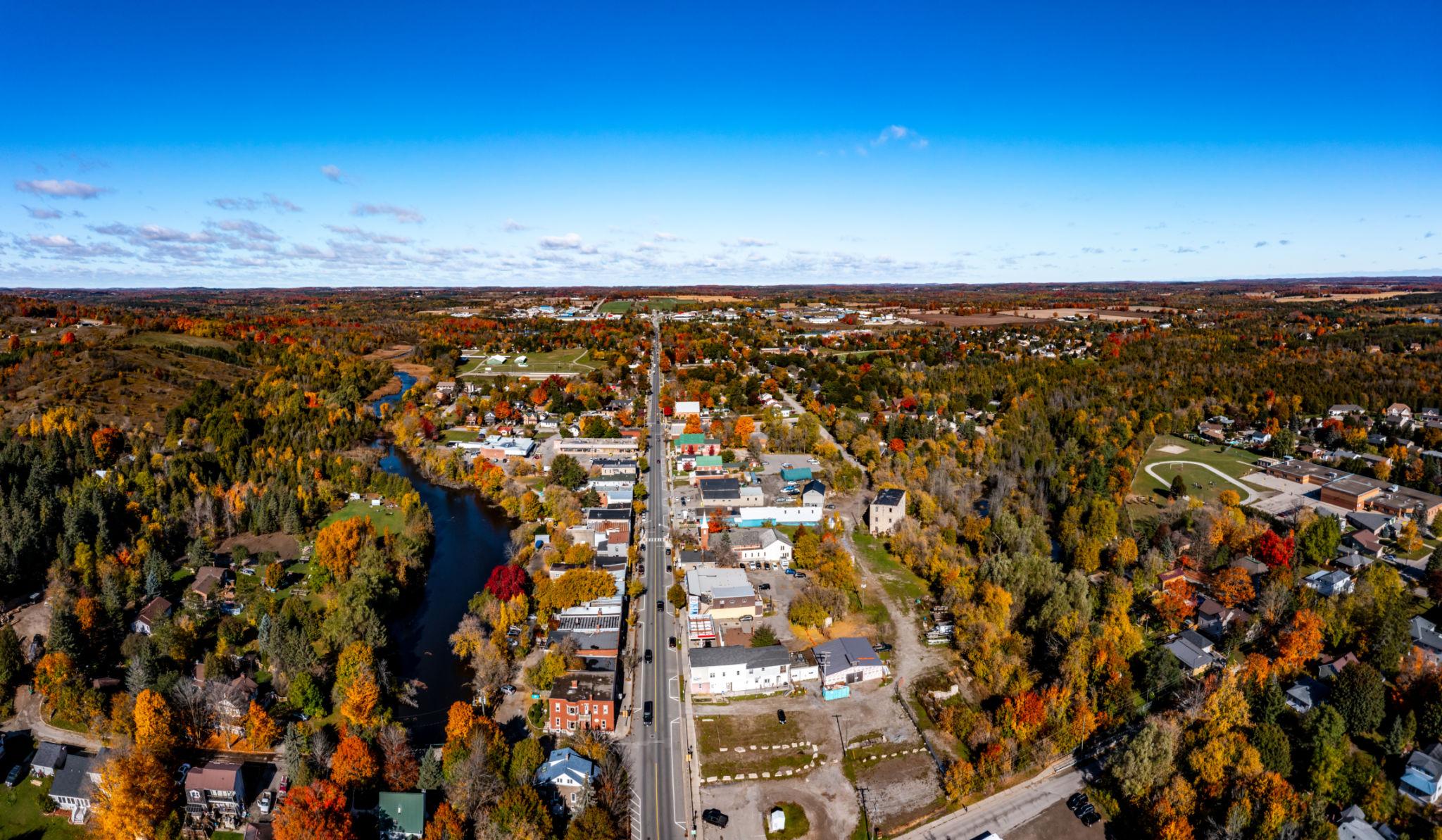
Property plays by local rules. That truth becomes obvious the moment you try to value a service commercial lot on Highway 6 in Puslinch, a downtown storefront in Fergus, or a small-bay industrial condo in Erin. The spreadsheet might travel, but the land does not. Wellington County brings its own zoning languages, servicing realities, conservation overlays, and market rhythms, and an appraisal produced without that context tends to misfire.
For investors, developers, lenders, and owner-occupiers, commercial land appraisers act as translators between physical and regulatory conditions on the ground and the monetary conclusions that keep deals, loans, and reports moving. A strong appraisal prevents surprises later, when the bank’s credit committee has questions or when a buyer’s environmental consultant flags a floodplain encroachment you missed in the rush to tender.
This guide pulls from years of files across Centre Wellington, Erin, Guelph-Eramosa, Puslinch, and the County’s northern townships. It focuses on how to navigate the landscape, how commercial land and building values are actually formed here, and how to get the most from commercial appraisal companies Wellington County relies on.
The local frame: where value forms in Wellington County
Markets here are diverse, but they share a few traits that consistently influence conclusions in a commercial building appraisal Wellington County stakeholders can trust. The first is demand linked to regional logistics and commuting. Proximity to the 401 via Brock Road or the Hanlon Expressway, and to Highway 6 north toward Owen Sound, keeps light industrial vacancy low along those corridors. The second is the tight land supply in serviced nodes, especially where sanitary capacity is finite or staged. The third is regulatory layering, from municipal zoning and County Official Plan policies to conservation authorities and the Niagara Escarpment Commission in parts of Erin and Puslinch.
Within this frame, two blocks can produce different value outcomes. A 0.7 acre parcel with full municipal services on the east side of Fergus, zoned for highway commercial, supports an income projection with fast-food or automotive-service users, even with modest building coverage. An almost identical parcel on the fringe, on private well and septic, carries a different cost to build and different timing to approvals, which pulls down the land residual.
Commercial property assessment Wellington County market participants discuss daily is also shaped by the building stock itself. Many small-town main street buildings predate 1950, with mixed-use layouts, older electrical, and heritage overlays. Modern tilt-up industrial arrives in smaller increments than in larger urban markets, often 10,000 to 40,000 square feet. That affects comparable sales selection and forces appraisers to reach across town and time, adjusting carefully for lease-up risk, tenant quality, and functional utility.
Appraisers do more than set a number
A credible report is not a single point; it is a reasoned pathway to a conclusion. For commercial land appraisers Wellington County clients lean on, the job involves:
- Scoping the highest and best use among legally permissible, physically possible, financially feasible, and maximally productive options.
- Mapping regulatory constraints, including zoning, setbacks, height limits, use permissions, parking ratios, and site plan triggers.
- Confirming servicing status and capacity, from municipal water and sanitary to stormwater outlets and road access classification.
- Weighing environmental flags and conservation regulations that influence yield, risk, and buyer pools.
- Selecting and adjusting evidence, then reconciling the Income, Sales Comparison, and Cost approaches in a market-sensitive way.
Those steps sound standard, but local details matter. An appraiser who recognizes that parts of Erin fall under the Niagara Escarpment Development Control Area will treat permission risk and timing differently for a rural contractor’s yard. A professional who knows Grand River Conservation Authority’s floodplain mapping through downtown Elora will handle value stability across flood-prone versus unencumbered blocks. These factors do not necessarily kill a deal, but they change cap rates, discount rates, and land residuals.
What “highest and best use” looks like on the ground
On a service commercial parcel along Highway 24 near Guelph-Eramosa, the legally permissible envelope might include car wash, quick-service restaurant, or showroom retail. Physically, a drive-through layout wants depth and traffic flow. Financially, the tenant mix matters. A nationally covenanted QSR can carry a build-to-suit rent that supports a higher land value than a local showroom user paying lower net rent. The maximally productive path becomes the one that leverages traffic counts and brand tenancy to support the strongest stabilized net operating income.
On a two acre rural lot in Wellington North, the best use analysis might settle on continued agricultural accessory or contractor storage with limited improvements, not a speculative industrial build. Private services, haul routes, and NEC or County policies around lot creation tip the scales. For downtown Fergus or Harriston, heritage district guidelines and parking supply can anchor best use to adaptive reuse with modest internal upgrades, rather than teardown and rebuild.
When a commercial building appraiser Wellington County retains fails to articulate the best use, two things usually go wrong later: the lender questions the lease-up assumptions because the use case does not match market absorption, or the municipality’s planning staff telegraphs resistance that adds months to the schedule.
Approaches to value, tuned to the county
Three approaches underpin most commercial appraisals. Not every file uses all three with equal weight, but each has a role.
Income approach. When a property is leased or leasable to market, the appraiser derives an income value by capitalizing stabilized net operating income or by discounting forecast cash flows. For small-bay industrial in Puslinch near the 401 access, asking net rents have recently ranged in the mid to upper teens per square foot, with new construction commanding a premium. Cap rates for stabilized small industrial generally track higher than large GTA assets, commonly in the 6.25 to 7.75 percent range depending on covenant strength, building age, and term remaining. Road exposure, yard space, clear height, and dock availability all push the needle. With retail strips in Fergus and Elora, the spread can widen due to tenant mix and smaller suites. An experienced appraiser does not pluck a cap rate from a metro report; they defend it with local trades, verified net rents, and financing conditions present at the valuation date.
Sales comparison approach. For commercial land or owner-occupied buildings, arm’s-length sales carry weight. The challenge is thin velocity in specific subtypes. A single-tenant retail pad on leased land might have no perfect comparable within 20 kilometers in the past year, so the appraiser triangulates with regional trades, adjusting for traffic counts, lease terms, site coverage, and brand strength. With development land, per acre prices range widely. Serviced highway commercial land near major intersections can transact at several hundred thousand dollars per acre more than unserviced rural commercial land. Yield, timing to approvals, and off-site cost obligations sit behind those differences.
Cost approach. Older downtown buildings complicate replacement cost analysis because reproduction cost is not the same as practical replacement, and external obsolescence can be significant if modern retailers prefer larger formats with parking. That said, for specialty uses like places of worship converted to event space, or for newer single-purpose service garages, cost can set a floor once depreciation is modeled appropriately.
A careful reconciliation step recognizes that approaches tell different stories. Income often leads for leased assets. Sales take the front seat for land. Cost provides reasonableness checks or supports insurance and lending coverage limits.
Regulatory realities that change math
Servicing status drives land value. Parcels inside an urban boundary with confirmed water and sanitary capacity generally warrant a lower yield threshold in a developer’s pro forma. In Erin, where the municipal wastewater project has rolled out in stages, timing risk and connection charges can move residual value up or down. In Centre Wellington, site plan approval timelines and any required road improvements factor into carry costs.
Zoning and policy frameworks are not a footnote. Commercial zoning categories across the County differ in permitted uses and performance standards. Minimum landscaping, maximum lot coverage, and parking ratios constrain building envelope and therefore rent-per-square-foot that can be earned on site. Conservation authorities, notably the Grand River Conservation Authority, map floodplains and regulated areas through Elora, Fergus, and beyond. Those lines can push building footprints back or add engineering and permitting costs. Parts of Erin and Puslinch fall under the Niagara Escarpment Commission. Each layer affects feasibility, either by limiting use or extending schedules.
Environmental constraints deserve attention early. Older service stations, dry cleaners, and automotive repair shops carry recognized environmental conditions that influence both buyer pools and lender appetite. Even on apparently clean agricultural lands slated for commercial rezoning, aggregate resource overlays or wellhead protection areas can complicate approvals. A Phase I Environmental Site Assessment, and often a geotechnical review if building loads will be substantial, are not optional in real underwriting.
Land valuation, practically
Most land appraisals in the County boil down to two methods: direct comparison on a per acre or per buildable square foot basis, and residual analysis. Residuals take the expected stabilized NOI of the proposed improvements, strip out development costs and soft costs, assign a developer’s profit, and discount to present value to isolate what a rational buyer would pay for the dirt today.
Here is where local experience pays off. Many pro formas underestimate off-site costs in smaller municipalities, where road improvements or utility upgrades are borne by the first mover. Servicing connection charges and development charges are not static either, and a small percentage change can move land value by six figures on mid-size projects. If a site in Guelph-Eramosa needs traffic improvements at a nearby intersection, the project budget grows, and the land residual drops unless rents or sale prices climb to compensate.
Entitlement timing is the other lever. An 18 to 24 month path from conditional purchase to building permit is not unusual for greenfield commercial in the County. Carrying costs through that period require a discount rate that reflects not only interest rates but also entitlement risk. Appraisers who simply insert a metropolitan discount rate miss the local drag from committee schedules, conservation authority review cycles, and pre-servicing conditions.
The difference between appraisal and assessment
Clients sometimes conflate a fee appraisal with municipal assessment. They are cousins, not twins. MPAC sets property tax assessments using mass appraisal methods across Ontario. A fee appraisal is a point-in-time opinion of market value for a specific use case, typically for financing, purchase, expropriation, litigation, or financial reporting. When someone searches for commercial property assessment Wellington County online, they may be looking to understand or appeal MPAC, or they may need a financing appraisal. Good appraisers clarify which assignment type they are being asked to perform. The evidence and reporting standards differ.
An MPAC assessment appeal may call for retrospective values and inequity analysis compared to similar properties’ assessments. A financing appraisal aims at current market value as of a stated date, with highest and best use explicitly tested. The skill sets overlap, but the methodology and supporting schedules are not identical.
Pricing risk, and how cap rates behave here
Cap rates and discount rates remain sensitive to lending conditions and tenant covenant. Over the past cycle of higher interest rates, cap rates for small-town Ontario commercial have moved outward by 100 to 200 basis points compared to the low-rate era. In Wellington County, that has meant:
- Small-bay industrial near major corridors stabilizing in the mid to high 6s to low 7s for well-leased assets with decent clear height and loading, higher for tertiary locations or short terms.
- Streetfront retail in smaller downtowns ranging widely, often 6.75 to 8.5 percent, depending on depth of local demand, parking, and tenant mix.
- Newer highway commercial pads anchored by national tenants compressing closer to 6 to 6.75 percent when lease terms and covenants support it, sometimes tighter if the tenant is investment grade and the location commands strong traffic counts.
Those are ranges, not promises. A meaningful vacancy risk, significant deferred maintenance, or specialized improvements without broad user appeal will pull the cap rate upward. Conversely, long terms remaining on leases to national brands, with annual escalations and landlord-friendly net leases, can compress the rate.
Selecting the right commercial appraiser
Credentials matter. So does transaction fluency in the County’s municipalities. When evaluating commercial appraisal companies Wellington County offers, consider a few practical filters.
- Local file depth. Ask how many assignments the firm has completed in Centre Wellington, Erin, Puslinch, and the northern townships in the past two years, and in what asset classes.
- Regulatory literacy. Probe for familiarity with GRCA mapping, NEC controls, and each municipality’s zoning and site plan process.
- Evidence discipline. Confirm that the appraiser verifies sales and lease data directly with parties when possible, and discloses data sources and adjustments clearly.
- Purpose clarity. Ensure the firm understands whether the assignment is financing, litigation, expropriation, or financial reporting, since scope and standards vary.
- Responsiveness and revision process. Lenders, lawyers, and municipal reviewers ask follow-up questions. Ask how the firm handles clarifications and turnaround times.
A short conversation around these points usually reveals whether you are dealing with commercial building appraisers Wellington County lenders already know, or a generalist out of area.
Due diligence steps that reduce surprises
Appraisals sit inside a broader due diligence stack. The most efficient transactions front-load the basics and keep the appraiser looped in as facts evolve.
- Secure current zoning and Official Plan confirmation in writing, and obtain any site-specific by-laws or exceptions that might change use permissions or performance standards.
- Order up-to-date servicing letters and any available capacity allocation confirmations, especially for sanitary.
- Commission a Phase I ESA, and if the site has automotive or dry-cleaning history, be prepared for Phase II.
- Pull conservation authority mapping and pre-consult early if floodplain or regulated areas are in play.
- Request recent rent rolls, leases, SNDA status, capital expenditure history, and building condition reports for income assets.
If the appraiser receives these artifacts before fieldwork, the report tightens, and the valuation risk band narrows. It also allows the appraiser to model scenarios, such as what happens to land residual if the site plan requires a stormwater easement that cuts developable area by 10 percent.
Edge cases and judgment calls
A few recurring situations in Wellington County require seasoned judgment.
Mixed-use main street assets. Two floors above a storefront in Elora, with short-term vacation rental income blended with residential, do not fit cleanly into standard underwriting boxes. Some lenders will haircut non-traditional income or cap it at long-term residential rates. An appraiser who understands lender behavior will model a stabilized scenario and may present sensitivity cases showing value under short-term and long-term rental assumptions.
Contractor yards and outdoor-intensive uses. Rural commercial and industrial properties often derive a portion of value from outdoor storage and yard functionality. Buyers heavily weight access routes, turning radii, and surface type. Zoning compliance on outdoor storage percentages and screening requirements becomes central. The appraiser should document permitted outdoor storage ratios and reflect the premium or penalty in their comparables.
Aggregate-adjacent lands. Southern Puslinch and pockets of Guelph-Eramosa carry aggregate resource and extraction histories. Even if the subject is not an active pit, nearby operations affect traffic, noise, and sometimes groundwater perceptions. The market may demand a small yield premium to compensate, which reads as a cap rate bump in the income approach or a discount in the land comparison grid.
Properties near wellhead protection areas. Source water protection policies around municipal wells can restrict certain uses and hazardous material handling. An auto repair user, for instance, might be a legal non-conforming use with limits on expansion. That reduces upward potential, which should be acknowledged in the highest and best use analysis and the risk adjustments.
What good reporting looks like
A defensible appraisal in this region reads like a clear narrative, not a collection of boilerplate charts. Expect to see the site’s regulatory overlays depicted and described, a zoning matrix for permitted uses with parking and performance standards summarized, and a servicing status explanation with references to letters or municipal contacts. The market section should not only present comparable sales and listings, but also explain why certain wider-area comparables were selected and how adjustments were derived.
In the valuation section, insist on transparent math. If the report uses an income approach, the rent, vacancy, expense assumptions, and cap rate should tie cleanly to evidence and should be reconciled with what lenders are underwriting at the valuation date. If a residual land value is presented, the pro forma inputs must be traceable to current construction costs, development charges, and soft cost allowances consistent with recent projects in the same municipality. Sensitivity tests, even simple ones, show professionalism.
Timelines, fees, and what affects both
For typical commercial land and small income properties, credible firms usually quote 10 to 20 business days from receipt of all documents to draft delivery. Complex assignments that involve large tracts, multiple phases, or litigation standards can run longer. Fees vary by scope and purpose. A straightforward commercial land appraisal Wellington County buyers need for financing may fall in the low to mid thousands of dollars. A detailed residual analysis with multiple scenarios or an expropriation file can push materially higher, especially when expert testimony is anticipated.
Two factors often derail timelines. First, slow document flow. If rent rolls, leases, surveys, and environmental reports arrive late or piecemeal, an appraiser cannot reconcile with confidence. Second, scope creep. Mid-assignment changes to valuation date, property interest, or assumed use require rework that disrupts schedules. Clear instructions at the outset prevent most of this.
Working with lenders and municipalities
Most regional lenders and credit unions active in Wellington County maintain their own approved appraiser lists. If a lender is already in the picture, verify that your chosen firm is acceptable to them. For development land, consider sharing the appraiser’s draft residual with your lender’s underwriter and, where appropriate, with municipal staff at a pre-consult. While the appraiser remains independent, aligned assumptions on development charges, engineering costs, and schedule can smooth financing and approvals.
Municipal planning departments, committees of adjustment, and conservation authorities play defined roles. An appraiser who has attended a few of those meetings knows how conditions attached to consents and site plans translate into real costs. That practical sense keeps the value opinion grounded.
When to bring in the appraiser
Too late is common. Bringing a commercial appraiser into the process at letter of intent or early conditional stage https://realexmedia82.gumroad.com/ often saves money, not adds it. On land purchases, a quick feasibility read can flag entitlement or servicing concerns before deposits go hard. On income properties, a rent roll scrub may highlight renewal cliffs or expense pass-through gaps that undercut the price you hoped to achieve. Conversely, I have seen sellers extract tens of thousands more by tightening expense recoveries and documenting tenancy strength ahead of listing, then providing the appraiser with that clear evidence.
For owner-occupiers building new facilities, an early appraisal can inform optimal building size and spec, tying supportable rent to mortgage coverage tests. It also helps in discussions with the builder and the municipality, anchoring decisions in what the financing environment will tolerate.
A steady hand in a shifting market
Markets shift. Interest rates, migration patterns, supply chain dynamics, and construction costs change the calculus for commercial real estate. In Wellington County, the fundamentals remain resilient, supported by regional connectivity and measured growth in serviced land. That said, pricing precision depends on data, and data depends on relationships. Commercial building appraisers Wellington County trusts tend to be the same professionals who pick up the phone, who ask planning staff the extra question, who do not assume Puslinch performs like Burlington or that downtown Fergus rents mirror Guelph.
If you build the right appraisal team, you get more than a number. You gain a working model of your property’s potential and its limitations, set within the County’s particular geography and governance. The work is meticulous rather than glamorous, but that is where risk drops and deals close.