CUSPAP Compliance: What to Expect from Commercial Appraisal Companies Cambridge Ontario
If you are buying, lending on, or refinancing a building in Cambridge, the quality of your appraisal will shape important decisions. In Canada, that quality is governed by CUSPAP, the Canadian Uniform Standards of Professional Appraisal Practice. It is https://privatebin.net/?95cdfbfe25232204#3hThF2WszoZSnm57zZHFDGwECbRc1xtTu3uDFYn7XNge not a marketing label or a nice-to-have. It is a mandatory framework for how competent appraisers define scope, gather evidence, analyze market data, and communicate value. In the commercial arena, CUSPAP sets a high bar, which is exactly what clients, lenders, and courts expect.
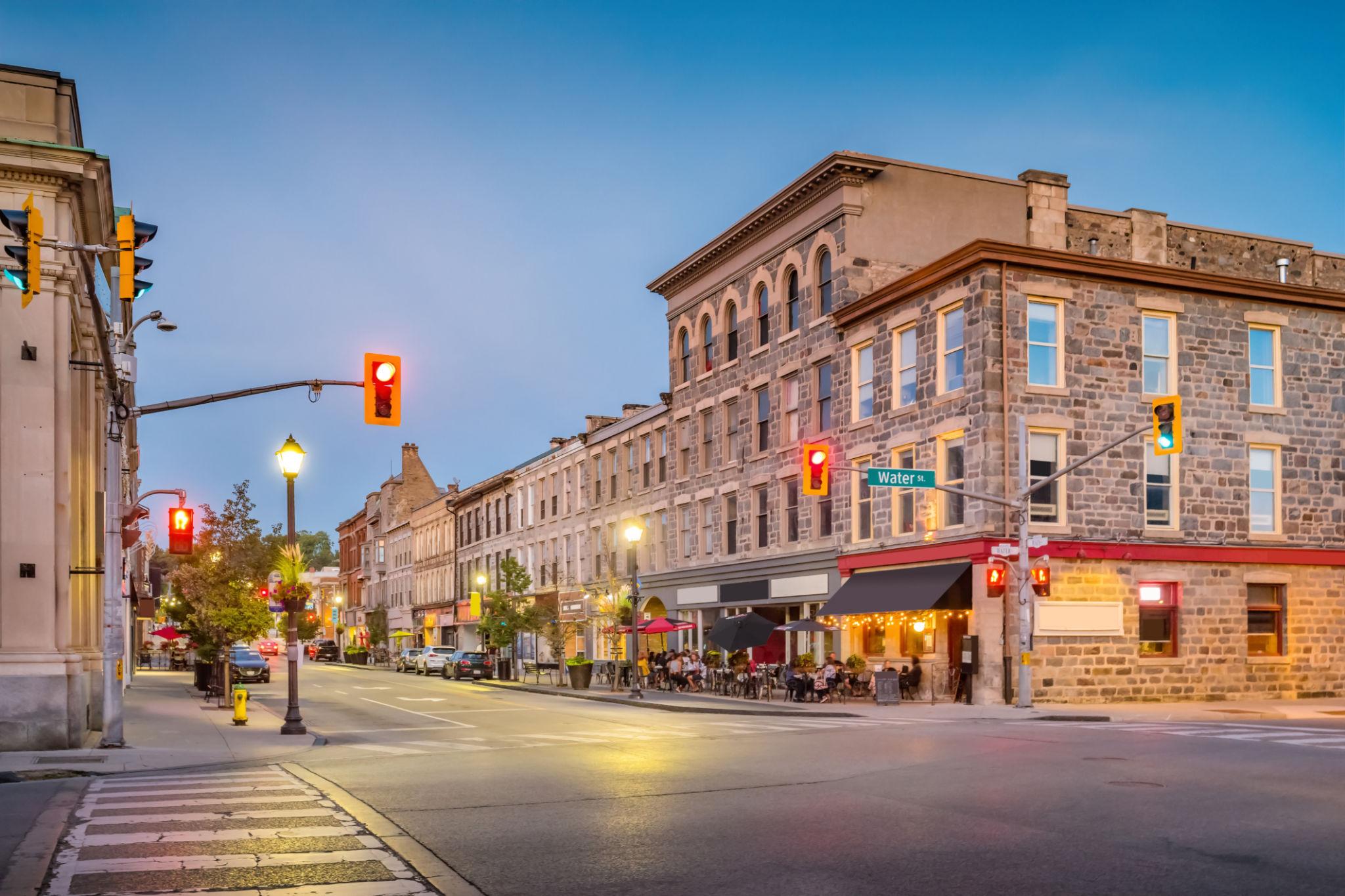
Cambridge sits within the Region of Waterloo, a corridor that mixes 401 logistics, advanced manufacturing, small-bay industrial parks, main street retail, older office stock, and development land under pressure. The Grand River, floodplain overlays, heritage properties in Galt, and intensification policies around Hespeler and Preston all affect value. A firm that claims local knowledge has to show how it navigates those details inside a CUSPAP-compliant process. That is the difference between a tidy narrative and a report you can rely on.
What CUSPAP actually governs
CUSPAP is published by the Appraisal Institute of Canada, and it binds designated appraisers. For commercial work in Cambridge, you should expect the lead appraiser to hold the AACI, P.App designation. CRA members specialize in residential and are not typically the primary signatories on complex income-producing properties.
CUSPAP is built around rules for ethics, scope of work, competency, record keeping, and reporting. It defines different report types, such as Appraisal Reports and Restricted Appraisal Reports, and sets boundaries for each. A few elements matter to most clients:
-
The Ethics Rule demands independence, objectivity, and confidentiality. If your appraiser previously acted as your listing agent on the same property or is paid on a success fee, that is a conflict that must be cleared or the assignment declined.
-
The Scope of Work Rule forces the appraiser to match methods and effort to the problem at hand. An industrial condo with abundant comps may call for a different mix of approaches than a special-purpose food processing plant. Under CUSPAP, the appraiser documents why they chose those methods and what they left out.
-
The Record Keeping Rule requires retention of data, notes, and calculations, typically for at least five years or longer if the jurisdiction or client contract says so. If a file ever faces audit or litigation, the workfile must support the conclusion.

-
Jurisdictional Exception exists for rare cases where law overrides CUSPAP. For example, if a court order limits disclosure, that is stated explicitly.
The standard is not theoretical. A CUSPAP-compliant report spells out the assignment conditions, extraordinary assumptions, hypothetical conditions, and intended use. It states who can rely on the report. It documents the valuation date and the effective date of any inspection, which can be crucial during fast-moving markets.
Appraisal vs assessment, and why it matters in Cambridge
Clients often mix up appraisal and assessment. Commercial property assessment in Cambridge, Ontario refers to the valuation that MPAC uses for municipal taxation. It relies on province-wide mass appraisal models and a legislated valuation date. A commercial building appraisal, on the other hand, addresses a specific property on a specific date, with a scope tailored to the assignment. Lenders and courts look for the latter, signed by an AACI, P.App who is accountable under CUSPAP.
If your report compares taxes or uses MPAC data, it should still reconcile to market evidence. I have seen cases where an owner assumed taxes were high relative to market, only to discover that a partial exemption or outdated assessment kept their expense ratio below peers. The appraiser’s job is to verify, not accept any one source at face value.
The Cambridge, Ontario market context
Cambridge has its own rhythms. Industrial vacancy has seesawed over the past decade, tightening in well-located parks near the 401 and easing on older small-bay assets tucked inside legacy neighborhoods. Net rents for modern distribution space with 28 to 32 foot clear height and good dock ratios will not mirror those for 1970s tilt-up with low clear height on an infill street. Office demand is uneven, with suburban flex spaces faring better than some downtown offices that rely on foot traffic. Retail along Hespeler Road behaves differently than main street retail in Galt, where façade restrictions and heritage overlays affect tenant mix and turnover.
Land is a separate story. Servicing, frontage, and stormwater capacity define what is feasible more than raw acreage. Parcels along Maple Grove and in North Cambridge move on different timelines than fragmented infill lots where assembly and environmental work can take years. The Grand River Conservation Authority regulates floodplains and development near watercourses. A CUSPAP-compliant commercial land appraisal must show how those controls shape highest and best use.
These nuances matter because they govern inputs: market rent, vacancy, capitalization rates, exposure time, and obsolescence adjustments. A good report will cite local comparables, describe how they differ, and quantify adjustments. It will also say when the data is thin and how the appraiser dealt with that constraint.
What a CUSPAP-compliant report should contain
- A clearly stated scope, intended use, and intended users, with the value type and effective date.
- A highest and best use analysis, as if vacant and as improved, supported by zoning, policy context, and physical constraints.
- A property description based on inspection and verified data, including legal description, building details, services, and site characteristics.
- Market analysis that anchors rents, expenses, yields, and price trends in verifiable evidence and explains key adjustments.
- A reconciliation section that weighs each approach to value and explains the final opinion of value in plain language.
If a report is missing these building blocks, lenders in Cambridge will push back. National lenders often use checklists that align closely with CUSPAP, and local credit unions are rarely looser. The common refrain is simple, show your work.
Approaches to value and when they fit
For most commercial building appraisal assignments in Cambridge, Ontario, three classical approaches are considered and then weighted.
Income approach. This is the backbone for income-producing assets. An appraiser analyzes contract rents, market rents, vacancy and credit loss, operating expenses, and capital costs. For triple net industrial space, the distinction between base rent and additional rent matters. For retail, percentage rents, breakpoints, and inducements can distort the headline number. The direct capitalization method requires a defensible capitalization rate derived from local sales, adjusted for location, quality, and lease terms. In uncertain rate environments, the band of investment method can cross-check the cap rate by blending mortgage and equity yields. For larger assets with uneven lease rollovers, a discounted cash flow may be appropriate, but lenders still expect a direct cap cross-check.
Sales comparison approach. Best for industrial condos, small-bay industrial, and simple office or retail where a sufficient number of recent sales exists. Given that many Cambridge deals are off-market or private, the appraiser has to verify terms with brokers, sellers, or buyer reps. Adjustments can be significant for clear height, loading, unit size, and finish. Where MLS is thin, third-party databases such as CoStar, Altus/RealNet, Teranet, or local brokerage intel come into play. Good reports cite source and date, not just a blurry average.
Cost approach. Useful for special-purpose assets or very new construction where depreciation can be credibly estimated. An appraiser will often use a recognized cost service, such as the Altus cost guide or Marshall and Swift, then adjust for local labor and materials. Functional obsolescence is frequently overlooked. A facility with an obsolete freezer, for example, can cost more to retrofit than to rebuild part of the plant. In Cambridge, where some legacy manufacturing footprints are deep but narrow, layout inefficiencies can be real money.
A strong report will consider all three, then discard or down-weight those that are not credible for the subject, with a clear explanation. For instance, a 1960s heavy industrial building on a constrained site with environmental stigma may show a cost that is too high relative to market, so the income and sales approaches do the heavy lifting.

Highest and best use in real life
CUSPAP requires a highest and best use analysis that is physically possible, legally permissible, financially feasible, and maximally productive. That short phrase hides a lot of judgment. On a serviced corner lot along Hespeler Road, a multi-tenant retail pad with drive-thru may be feasible even if zoning still shows legacy permissions, because policy signals an easy path to rezoning. In Galt, heritage controls can prevent tear-downs, pushing the optimal path toward adaptive reuse.
Where the site sits within a floodplain, development potential can shrink. I worked on a site where the owner assumed a mid-rise condo would sail through. The GRCA flood lines and required compensatory storage turned it into a low-yield proposition. The highest and best use ended up as a staged redevelopment with less density and more open space, which changed the land value substantially. A compliant report must lay out those constraints and their valuation impact.
Land appraisals have their own rules of the road
Commercial land appraisers in Cambridge, Ontario wrestle with a different data problem. Few arms-length sales close each year, many include unusual conditions, and municipalities apply development charges and parkland levies in ways that matter. The best land reports unpack:
-
Servicing status, including water, sanitary, storm, and capacity. A site with a servicing strategy can be worth more than a larger raw parcel without it.
-
Planning status within the Region of Waterloo Official Plan and the City of Cambridge zoning by-law, with a realistic view of timing risk.
-
Comparable sales adjusted for density on a per buildable square foot basis or per unit basis, with care not to blend low-rise and mid-rise economics.
-
Environmental history. Former automotive uses, dry cleaners, and industrial yards move the needle on time and value. A Phase I ESA is not optional for serious lending.
Good land appraisals show a path through uncertainty. They do not promise approvals. They translate the most likely development program into a number that a lender can underwrite.
Data, verification, and the Cambridge network
CUSPAP expects credible, verifiable data. In practice, that means your appraiser should be calling local brokers, cross-checking with Teranet registrations, and reviewing lease abstracts rather than relying on marketing flyers. For rent comparables, discussions with property managers often clarify who is actually paying for HVAC, what inducements were used, and how long it took to backfill a vacancy. In Cambridge’s industrial parks, asking rents can be 50 to 150 basis points off effective rents during volatile periods once you net out months of free rent and tenant improvements.
The report should identify sources by type and date. If a comparable is confidential, the appraiser can anonymize while still describing the property, transaction timing, and the key vectors that justified adjustments. Boilerplate without dates or contacts is a red flag.
Engagement terms and reliance
A CUSPAP-compliant engagement starts with an agreement that names intended users and intended use. If a bank is relying on the report, the bank must be named. Adding reliance letters after the fact is messy and some lenders will not accept them. Expect to see standard terms covering independence, a right to inspect, the valuation date, and a limit on distribution. Fees are usually fixed for standard product types, with add-ons for extraordinary complexity like multi-parcel titles, partial interests, or contamination.
Turnaround time in Cambridge for a typical single-tenant industrial building is often 7 to 15 business days after inspection and receipt of documents. Complex assets or land assemblies can take 3 to 5 weeks. Rush jobs are possible but require trade-offs. An appraiser cannot compress verification or analysis below what is necessary for credibility under CUSPAP, even if a closing date looms.
Lender expectations and common addenda
Most commercial appraisal companies in Cambridge, Ontario know lender expectations well. You may see requests for:
-
An as-is value and, if applicable, an as-stabilized value with a realistic lease-up period.
-
Exposure time and marketing time, which are CUSPAP requirements and must be supported by market evidence.
-
Sensitivity analysis for rent or cap rates where market conditions are in flux.
-
A copy of the appraiser’s E&O insurance certificate and proof of designation.
-
Specific independence statements, reliance wording, or assumptions that align with internal credit policies.
These are all compatible with CUSPAP, as long as the appraiser stays in control of the analysis and does not adopt client conclusions without verification.
Environmental, building condition, and going concern issues
CUSPAP allows extraordinary assumptions and hypothetical conditions, but they must be clearly identified. If a Phase I ESA is pending and the appraiser proceeds as if no contamination exists, that is an extraordinary assumption that can change value if later proved false. Similarly, when a building condition assessment identifies a near-term roof replacement or parking lot failure, those capital items should appear in the cash flow or be reflected via a deduction.
For properties with operating businesses, such as hotels, gas stations, or seniors housing, value often includes non-real estate components like furniture, fixtures and equipment or intangible business value. A CUSPAP-compliant report separates the real property from the going concern, or at least identifies what is included so a lender can adjust.
Red flags that suggest weak compliance
I have reviewed reports where the numbers looked tidy but the foundation was thin. Watch for sweeping adjustments without quantification, cap rates that ignore current debt costs, or a highest and best use that parrots a listing memo rather than municipal reality. Be wary if market rent equals contract rent conveniently, vacancy is a round number without a source, or the appraiser declines to state exposure time. None of these alone proves non-compliance, but together they signal a file that may not survive scrutiny.
How owners and lenders can prepare to streamline the work
- Provide full rent rolls, lease copies, and a history of arrears or abatements, not just a summary.
- Share recent capital expenditures and planned projects with dates and invoices where available.
- Deliver surveys, site plans, floor plans, and any environmental or building condition reports.
- Clarify the intended use and intended users at the start so reliance is clear.
- Flag unusual issues early, such as shared driveways, easements, encroachments, or partial interests.
When clients provide these early, a seasoned commercial building appraiser in Cambridge, Ontario can move faster and spend their time on market analysis rather than chasing basics.
Practical examples from the Cambridge market
A small-bay industrial condo in Hespeler. The first pass at the sales comparison approach showed a tight range of prices. A deeper look revealed two comps with unusually low prices due to seller financing and deferred maintenance. Removing those and adjusting for unit size and finish brought the subject into line with five other transactions. The income approach, using market net rent and a cap rate supported by six industrial sales within 20 minutes of the site, landed within 2 percent of the sales conclusion. The lender was comfortable because each step was transparent and consistent with CUSPAP.
A heritage retail building in Galt. The owner had renovated upper floors into offices without formal permits years earlier. The highest and best use analysis dug into zoning and heritage constraints, and the appraiser treated the unpermitted area carefully, noting the risk that future enforcement could affect income. The final value reflected a discount to properties with regularized approvals. The clarity around assumptions allowed the buyer to price the risk rather than discovering it later.
An industrial land parcel near the 401. The seller marketed the site at a per acre price that implied a density no one could achieve due to stormwater constraints. The appraiser modeled a realistic coverage ratio, used per buildable square foot land comparables, and clearly explained the difference. The buyer trimmed price expectations, the lender advanced debt on conservative land value, and the project proceeded with eyes open.
Fees, timing, and scope creep
Clients often ask for a ballpark fee. For standard single-tenant industrial or small office assets, commercial appraisal companies in Cambridge, Ontario commonly quote in the low to mid four figures, depending on complexity and timeline. Multi-tenant, special-purpose, or land assignments run higher. When scope creeps, it is usually because new facts emerge, such as multiple PINs, encroachments, contamination, or a request for additional value scenarios. Under CUSPAP, the appraiser can expand scope, but it should be documented, priced, and time-adjusted, not absorbed quietly.
Communication matters
Good appraisers explain uncertainty without hedging the bottom line. If data is thin, they say so and triangulate with secondary indicators. If cap rates widened in the past three months, they say how that shows up in the conclusion. Phone calls during the assignment are not a sign of weakness. They are part of verification and often surface facts that change direction. CUSPAP does not require silence, it requires independence.
What sets strong firms apart in Cambridge
Experience shows in how an appraiser frames the problem. For a commercial property assessment in Cambridge, Ontario that you plan to appeal, an appraiser who can translate MPAC methodology into market terms is invaluable. For a construction loan on a new logistics facility, a firm that tracks lease-up velocity and inducements across the 401 corridor can set credible absorption timelines. For specialized work like food-grade or lab-ready space, practical knowledge of build-out costs and regulatory overlays beats template analysis.
Look for firms that:
-
Assign AACI, P.App signatories with local files under their belt.
-
Cite recent, verified comparables and explain adjustments in words and numbers.
-
Acknowledge regulatory context, from the Region of Waterloo to the GRCA.
-
Separate real property from going concern where relevant.
-
Offer frank pre-engagement advice when a Restricted Appraisal Report is not suitable.
You will find that the best commercial appraisal companies in Cambridge, Ontario do not promise the highest value. They promise defensible value with transparent reasoning.
Final thoughts for buyers, owners, and lenders
A CUSPAP-compliant report is more than a document. It is a set of professional judgments tied to clear evidence. In a market like Cambridge, where one block can mean the difference between a stable tenant base and a slow lease-up, you need an appraiser who speaks the local dialect and can still meet national standards. Whether you are hiring commercial building appraisers in Cambridge, Ontario for a straightforward refinance or working with commercial land appraisers in Cambridge, Ontario on a complicated assembly, insist on the fundamentals: explicit scope, credible data, transparent adjustments, and a reconciliation that reads like it was written by someone who set foot on site and talked to the market.
The reward is not just a number that closes a loan. It is a valuation you can defend six months from now when a credit committee asks hard questions, or three years from now when a partner buyout leans on today’s file. That is what CUSPAP compliance should deliver, and what you should expect every time you engage a professional in this city.