Commercial Real Estate Appraisal Perth County: Methods, Metrics, and Valuation Approaches
Perth County is not Toronto, and that is exactly why the craft of valuation matters here. Deals get done on Main Street and in industrial parks that back onto farm fields. A single lease renewal can swing the value of a small plaza. A new roundabout can redirect traffic and reposition a parcel overnight. When an appraisal reads the local signals accurately, lenders lend, buyers buy, and owners make the right capital decisions. When it misses, time and money go sideways.
This article lays out how commercial real estate appraisal works in Perth County, what metrics actually drive value, and how seasoned practitioners select a method to fit the property, not the other way around. While the principles apply across Ontario, the examples draw from Stratford, St. Marys, Listowel, Mitchell, and the townships that hold much of the county’s industrial tax base.
The lay of the land: what makes Perth County different
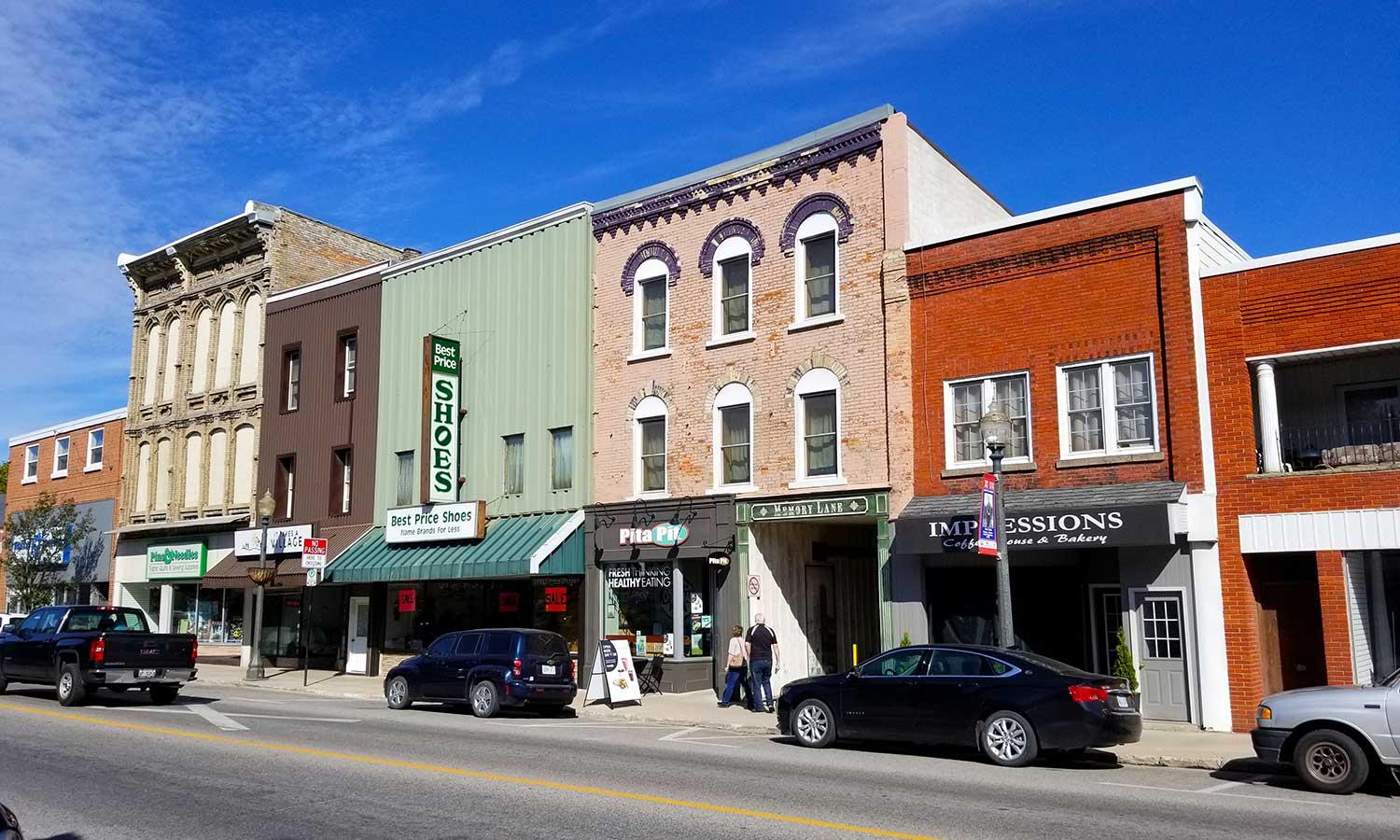
Markets with a few dominant players and long tenant relationships behave differently from cities with fluid, anonymous leasing. In Perth County, most commercial assets fall into a handful of buckets: downtown mixed use in Stratford and St. Marys, highway commercial along corridors feeding Kitchener and London, flex and light industrial scattered through Listowel and Mitchell, agricultural support facilities, and owner occupied buildings that blur the line between operating business and real estate.
Transaction volume is thinner than in larger centres, so comparable sales are scarcer and often messier. Some are share deals where the price includes items that do not flow cleanly into a real property conclusion. Others involve partial interests or vendor take back financing. Lease comparables can be dated, and inducements are negotiated on the backs of envelopes. All of this pushes the commercial appraiser in Perth County to do more primary research, confirm terms with brokers and owners directly, and lean on judgement. It also raises the stakes for a thoughtful highest and best use analysis. In a compact downtown, short term vacation rentals above a storefront might outbid a long term office tenant. In a hamlet, the best use of an older shop could be conversion to contractor bays with outdoor storage, subject to zoning.
Regulation adds another layer. Appraisers typically report under the Canadian Uniform Standards of Professional Appraisal Practice, and lenders have their own overlays. Property taxes are assessed by MPAC for municipal purposes, but MPAC’s value is not the same thing as market value for financing or purchase. Local zoning by laws, site plan controls, and conservation authority constraints along the Thames and Avon rivers can materially affect what a site can do, which in turn affects value.
Three classic approaches, used with local nuance
Every commercial property appraisal in Perth County starts with the same toolkit. The skill lies in knowing which tool to rely on and how to reconcile the answers.
Income approach. This method converts income into value, typically through direct capitalization or a discounted cash flow model. It is most useful for stabilized, income producing assets where market rent, vacancy, and expenses can be benchmarked with some confidence.
Direct comparison approach. Here, recent sales of similar properties are analyzed and adjusted to infer value. It works best when enough clean comps exist. In a small market, the selection and adjustment stage carries more weight because single tenant risk, vendor financing, or special conditions can distort sale prices.
Cost approach. The value of land is added to the depreciated replacement cost of improvements. It tends to be most credible for newer properties with limited income data, special purpose buildings, or when the market is thin. Replacement, not reproduction, is the relevant lens for most commercial assets here, since owners rarely rebuild quirky features that do not add rent.
A solid report may use all three, but it should not pretend they carry equal weight. For a fully leased industrial row in Listowel, the income approach usually leads. For a modern owner occupied medical building in Stratford with two floors of purpose built clinics, the cost approach sometimes anchors the conclusion, with sales and income serving as reasonableness checks. For a downtown mixed use building with renovated apartments above and a café below, direct comparison and income often meet in the middle.
How the income approach earns its keep
If the goal is to value the real property interest, not the operating business, the income approach has to strip the revenue stream down to market rent and true operating costs. In practice, that means interrogating leases and normalizing for issues that routinely pop up in Perth County:
-
Owner occupancy. Many buildings are held by the same shareholders as the business inside. The rent on paper might be above or below market. An appraiser should replace it with market rent supported by comparables, then model stabilized vacancy, not zero, even for a well located property.
-
Single tenant risk. A one tenant building in a town of 7,000 carries relocation risk that a multi tenant plaza in a larger centre does not. Cap rates and downtime allowances reflect this. The tenant’s covenant matters. A national pharmacy on a corporate lease is not the same as a franchise gym.
-
Expense leakage. In some triple net arrangements, the landlord still pays roof repairs, parking lot maintenance, or management. Verify the actual pass through language. If reserves are not explicitly recovered, an appraiser should include them in the operating statement.
-
Tenant inducements and free rent. Many local lease deals rely on a few months of free rent and landlord funded buildouts rather than large cash inducements. The economic rent over the term should be considered, and if the tenant is new, an initial vacancy spike followed by stabilized occupancy may fit reality better than assuming day one stabilization.
For direct capitalization, the workflow is straightforward on paper: estimate potential gross income, subtract vacancy and credit loss to get effective gross income, deduct operating expenses and reserves to arrive at net operating income, then divide by a market capitalization rate. The craft lies in the estimates. In the past few years, cap rates for small town commercial have drifted within broad ranges, often higher for secondary locations and single tenant buildings, and tighter for well located multi tenant industrial. The rate used should be supported by local sales analysis and broker sentiment, not imported from a city an hour down the highway.
A discounted cash flow model adds time to the equation. It is appropriate when leases roll over at different times, when a major renewal is looming, or when a building will transition from below market rents to market within the holding period. The model should include lease up downtime, leasing commissions consistent with local practice, and tenant improvement allowances that match the property type. For a small industrial bay, tenant improvements might be modest. For medical office, they can be significant and amortized via net effective rent.
Direct comparison in a thin market
Perth County does not give up a dozen perfect comps on command. That fact does not make the direct comparison approach useless. It just changes how it is executed.


The first step is casting a wider net for sales, then trimming back to the most relevant. City of Stratford records, Teranet’s land registry data, MLS where applicable, and broker interviews build the raw pool. The pitfalls are familiar. Some sales fold equipment or goodwill into the price. Others are portfolio trades where the allocation to a single asset is fuzzy. Vendor take back mortgages can inflate a price if the interest rate is below market. When those features appear, the appraiser makes a market based adjustment or sets the sale aside.
Adjustments for location, size, quality, condition, and date of sale should capture local realities. A downtown Stratford storefront with strong tourist traffic is not equivalent to a Main Street in a smaller town, and an older shop building with 12 foot clear height is not in the same bracket as a newer 24 foot clear flex unit even if both are 8,000 square feet. When two or three well verified sales bracket the subject, the direct comparison conclusion carries weight, even if the comp count is not large.
Where the cost approach shines
The cost approach is rooted in a simple question: what would it cost, today, to build a modern equivalent on similar land, and what is the loss in value from age and obsolescence. For tilt up industrial buildings or newer retail pads with known construction dates and clear specifications, published cost guides plus contractor quotes can build a credible replacement cost new. Physical depreciation can be supported with observed condition and effective age. Functional issues must be confronted directly. An over improved interior for a niche use, or narrow column spacing that caps racking options, reduces value because a typical buyer will not pay for features that do not generate rent.
Land value comes from vacant land sales or land residual analysis, which can be tricky in built up areas with few recent transactions. In those cases, careful cross checks against assessed land rates and broker opinions provide a sanity check, not a substitute.
Highest and best use is not a throwaway paragraph
Before methods and metrics, the appraiser must decide what use is legally permissible, physically possible, financially feasible, and maximally productive. This flows from zoning, physical constraints, and the market. A one acre parcel with a tired single use building along a commercial corridor might support a small multi tenant development if access, parking, and servicing allow it. Conversely, heritage https://realex.ca/commercial-property-appraisal-services/ controls in downtown Stratford may cap development intensity and affect the feasibility of conversion. The conclusion drives the valuation path. If redevelopment is the best use and a buyer would act on it within a reasonable time, a land value with demolition costs and carrying time may be more relevant than an income value for a fading improvement.
Data, verification, and the reality of small sample sizes
The quality of a commercial property appraisal in Perth County often tracks the depth of its data work. Sales confirmation calls to lawyers, listing agents, or buyers unearth details that do not show on a deed. Lease rates in brokerage databases may be gross or net, and inducements are frequently missing. Tax records help reconcile building sizes, and site plans clarify parking counts that affect retail leasing. Environmental context matters. Former auto service uses, dry cleaners, and agricultural chemical storage sites warrant a check for Phase I environmental site assessments. Even a hint of contamination risk nudges the cap rate upward or reduces the land value a prudent buyer would pay.
Vacancy and exposure time estimates should align with observed leasing velocity. In some Perth County industrial parks, a clean 5,000 square foot bay at a market rent can lease in weeks. Downtown office suites above grade, especially in older buildings without elevators, can take months. The report should state a supportable marketing time and exposure time, typically in ranges, and tie them to the property’s segment.
Local factors that move the needle
Municipal policies, infrastructure, and employer stability shape value more here than macro headlines alone. Announced expansions or contractions at major employers ripple through industrial absorption and retail spending. Transportation improvements that ease commuting to and from Kitchener, London, or the GTA change trade areas and tenant pools. Development charges and servicing constraints influence what gets built and when. Zoning reforms that allow more residential units above storefronts lift the cash flow ceiling for mixed use properties, which then raises land residuals along certain blocks.
Floodplain mapping along the Thames and Avon affects buildable area and insurability for riverside sites. Heritage designation can be an asset for tourist driven retail but impose cost and time on redevelopment. An experienced commercial appraiser in Perth County will weigh these factors, not just mention them.
Metrics that matter, and how they interact
Cap rate. A cap rate is not a number to memorize from a chart. It is a synthesis of risk, growth expectations, and alternative returns. In Perth County, multi tenant industrial with steady local demand may trade at tighter rates than single tenant boxes or tertiary retail. The rate used should mesh with the property’s tenant profile, lease terms, and location. If an appraisal uses a cap rate of 6.5 percent, for example, it should reconcile to recent sales analysis and present lending spreads.
Market rent. Lease comparables should be normalized to a common basis, typically net rent, with operating cost recoveries mapped to the subject’s structure. Inducements and buildouts convert to a net effective rate over the term. For older properties, the gap between in place rent and market rent can be real, and a DCF can show how and when that gap closes.
Vacancy and credit loss. Stabilized vacancy is not the same as current vacancy. A fully leased building still warrants a non zero allowance for rollover risk and transient downtime. The rate should reflect submarket conditions, not a regional average.
Operating expenses. Property taxes, insurance, utilities for common areas, maintenance, management, and reserves need to be modeled in a way that aligns with lease structure. Even in NNN buildings, landlords often incur non recoverable items.
Tenant improvements and leasing costs. These costs vary widely by use. Underwriting them realistically avoids inflated values that ignore the capital needed to keep occupancy stable over a hold period.
Three quick sketches from the field
A small industrial condo in Stratford. The unit measures 3,200 square feet with 20 foot clear height, modest office buildout, and a drive in door. It is owner occupied by a trades business. There are few recent condo unit sales, but several leases in the park. The income approach anchors value by imputing a market net rent from those leases, applying a stabilized vacancy allowance of roughly 3 to 5 percent, and using a cap rate bracketed by sales of similar units in nearby markets adjusted for size and location. The direct comparison approach references a couple of unit sales in the past two years, adjusted for date, size, and finish. The cost approach serves as a bound given recent construction costs in the area. Reconciliation leans on income because future buyers are likely investors or owner users making an income based bid.
A Main Street retail in St. Marys. Ground floor café on a net lease, two apartments above at market rents post renovation. Street level exposure is good, tourist foot traffic is seasonal. The income approach models separate streams for retail and residential, with different vacancy and expense profiles. The direct comparison approach pulls mixed use sales from downtown cores in Stratford and St. Marys, adjusted for retail depth, residential finish, and parking. Heritage controls limit exterior changes, which informs the highest and best use conclusion. Reconciliation balances both approaches because good mixed use comps exist, and the building is stabilized.
A multi tenant industrial in Listowel. Three tenants, staggered expiries, 16,500 square feet total, basic finishes. One tenant is a local distribution firm with solid tenure but no national covenant. The DCF approach is appropriate, incorporating renewal probabilities, downtime, leasing commissions consistent with the corridor, and tenant improvement allowances for light industrial. The direct cap serves as a cross check at stabilized year three. Limited sales data in town pushes the appraiser to widen the radius and adjust rates for location and tenant mix. Single tenant risk does not apply, which supports a slightly tighter cap than a comparable single occupant building.
Reconciling answers is a judgment call, not an average
Reports that average three numbers often mask the real answer. If the income approach reflects a deep understanding of the leases, tenants, and underwriting norms, it should lead for income assets. If the subject is new construction with cost data in hand and income is still ramping up, the cost approach may command more weight. Direct comparison earns its keep when clean, recent, local sales exist and the adjustment grid makes sense. The final value range should be narrow enough to be useful but honest about uncertainty. In a thin market with volatile inputs, a value range can be more credible than a single number dragged to the decimal.
What lenders and investors expect to see
Commercial appraisal services in Perth County generally deliver a narrative or form report that addresses property description, market context, highest and best use, approaches to value, and a reconciled conclusion, along with exposure and marketing time. Lenders look for adherence to CUSPAP, a clear statement of interest appraised, extraordinary assumptions or hypothetical conditions if any, and a scope of work that matches the assignment. Investors and owner occupiers read closely for the rent roll analysis, cap rate support, and any flags around environmental or structural issues.
If HST treatment is relevant, the report should state assumptions. For most income producing commercial property appraisals in Ontario, value is reported on a before HST basis unless the assignment dictates otherwise. Financing conditions may impose as is versus as complete or as stabilized scenarios, each with different risk profiles.
Selecting a commercial appraiser in Perth County
A capable commercial appraiser in Perth County balances technical method with local knowledge. Ask about their recent assignments in the county, their approach to sparse comparables, and how they verify sales and lease data. If your property is specialized, such as ag supply with regulated hazardous storage or medical office with extensive fit out, choose someone who has valued similar uses. Lender panels can be a helpful guide, but they are not exclusive. Turnaround depends on access to information and property complexity. Two to four weeks is a typical range once the appraiser has the documents and site access.
What to prepare for a smoother process
- Current rent roll with lease start and end dates, options, and recovery structures
- Copies of all leases, including amendments and side letters
- Most recent operating statements, with detail on non recoverable expenses
- Building plans, site plan, surveys, and any environmental or structural reports
- Notes on recent capital projects, deferred maintenance, and known zoning or permitting issues
Providing complete and accurate materials early reduces back and forth, improves the reliability of the income approach, and sharpens the appraiser’s adjustment work in the direct comparison section.
Common missteps that distort value
-
Treating owner set rent as market. Even if a corporate structure pays rent between related entities, the appraisal should normalize to market to reflect what a buyer would face.
-
Ignoring downtime and leasing costs. Assuming perfect rollover can overstate value in multi tenant properties.
-
Overlooking environmental shadows. Former dry cleaner nearby, historical fuel storage, or even older fill on site can change a buyer’s calculus and lender terms.
-
Copying cap rates from other markets. A cap rate from Kitchener or London is a starting point at best. Adjust for tenant mix, size, and local liquidity.
-
Forgetting highest and best use. In some cases, land value plus redevelopment potential eclipses the income value of an obsolete structure, even if the building is occupied.
A word on ethics, independence, and scope
A commercial real estate appraisal in Perth County must remain independent. That means the appraiser cannot be pressured to meet a number to make a deal work. It also means scoping the assignment properly. If a lender requests an as is value and an as stabilized value for a property undergoing lease up, the report should clearly segregate the scenarios and assumptions. Extraordinary assumptions, such as completion of a planned buildout or successful minor variance, must be stated plainly with a discussion of their impact. If critical information cannot be obtained, the report should disclose the limitation and estimate the risk it introduces to the conclusion.
Where the market is heading, and why it matters for valuation
In smaller markets, the arc of value often bends with a few drivers: interest rates, regional employment, and supply additions. An uptick in rates lifts cap rates unless rent growth or investor appetite for stable cash flow offsets it. Plant expansions or contractions among anchor employers ripple through industrial and retail segments quickly. New supply, especially in industrial parks along major corridors, can tighten vacancy for a period if it attracts tenants from out of town, or soften rents if it mostly shuffles existing tenants.
An appraiser does not forecast the market for sport, but they do need to situate the subject within its likely path. If rents are 10 to 15 percent below what new leases are signing for, a DCF that models step ups at renewal is appropriate. If operating costs, particularly insurance and utilities, are rising faster than rent growth, underwriting should reflect that. The point is not to guess the future, but to avoid a static view that misstates risk today.
Bringing it all together
A rigorous commercial appraisal perth county assignment meets the property where it stands. It reads the leases, walks the site, talks to people who know the street, and weighs the three approaches with a clear head. The numbers matter, but so do the judgements behind them, especially in a county where a handful of good or bad comps can swing an analysis. When you engage commercial appraisal services Perth County for purchase, financing, tax appeal, or estate planning, insist on that blend of method and local sense. It is what separates a report that sits on a shelf from one that helps you make a decision.
If you own or plan to buy, sell, or finance a property here, start by clarifying the assignment question, gather the documents that let an appraiser build a proper model, and pick a professional who can explain why each method works or falls short for your asset. That is the straightest line to a value that you, your lender, and the market can live with.